 English
 русский
 Español
Whether you are repairing collision damage, upgrading lighting, or replacing worn components, sourcing the correct auto spare part, auto accessory, or auto body part from a reputable supplier is the single most important factor in repair quality and long-term reliability. From bumpers and car doors to side mirrors, taillights, LED lights, and Hella lighting systems, understanding what each part category requires — in terms of fit, material grade, and certification — saves money, prevents rework, and keeps vehicles roadworthy and legally compliant.
Content
- 1 Auto Spare Parts vs. Auto Body Parts vs. Auto Accessories: What's the Difference
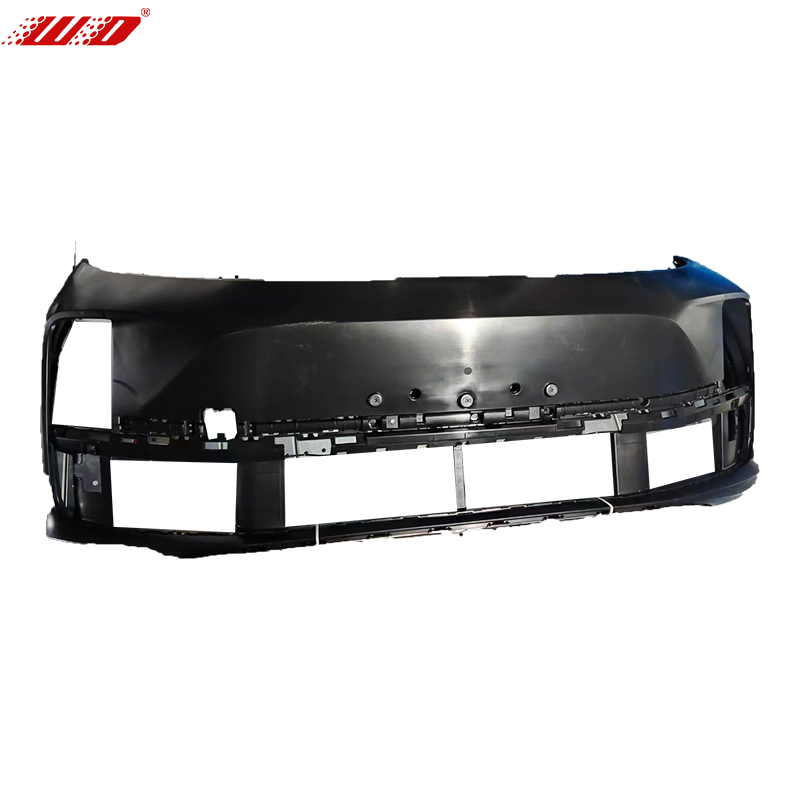
- 2 Bumpers: What to Demand from a Bumper Factory
- 3 Car Door Replacement: Fitment, Trim Level, and Safety Considerations
- 4 Side Mirrors: Beyond the Glass — What the Whole Assembly Involves
- 5 Taillights and LED Lights: Safety, Legality, and Performance
- 6 Hella Lights: Why OEM-Tier Lighting Matters for Safety and Resale
- 7 How to Evaluate Auto Spare Part Suppliers: OEM, OES, and Aftermarket
- 8 Practical Checklist When Sourcing Auto Body Parts and Lighting
Auto Spare Parts vs. Auto Body Parts vs. Auto Accessories: What's the Difference
These three terms are often used interchangeably in the aftermarket industry, but they refer to distinct product categories with different sourcing, fitment, and quality considerations.
- Auto spare parts are functional mechanical or electrical components that directly affect vehicle operation — engine parts, brake components, sensors, alternators, and lighting systems like taillights and headlights. Failure of a spare part typically means the vehicle cannot operate safely or legally.
- Auto body parts are structural or exterior panel components that define the vehicle's shape, aerodynamics, and occupant protection — bumpers, car doors, fenders, hoods, and quarter panels. They affect both aesthetics and crash safety performance.
- Auto accessories are add-on or enhancement items that improve comfort, convenience, or appearance without being part of the vehicle's original safety or operational systems — floor mats, seat covers, dash cameras, roof racks, and decorative lighting strips.
Understanding this distinction matters when evaluating suppliers. A bumper factory producing OEM-grade body parts operates under entirely different quality standards than a factory producing interior auto accessories. Mixing up sourcing channels for these categories is a common and costly mistake.
Bumpers: What to Demand from a Bumper Factory
The bumper is among the most frequently replaced auto body parts globally. In the United States alone, bumper repairs and replacements account for over 30% of all collision repair claims, making it one of the highest-volume aftermarket body parts in the industry. Choosing the right bumper factory — whether for direct replacement, resale, or fleet repair — requires evaluating several technical and compliance factors.
Bumper Materials and Their Trade-offs
| Material | Impact Resistance | Paintability | Weight | Typical Use |
|---|---|---|---|---|
| PP/EPDM Blend | High | Good (requires primer) | Light | Passenger cars, SUVs |
| SMC (Sheet Molding Compound) | Medium | Excellent | Medium | Trucks, performance vehicles |
| ABS Plastic | Medium-Low | Excellent | Light | Economy vehicles, budget aftermarket |
| Fiberglass | Low (brittle) | Excellent | Light | Custom/sport applications |
When evaluating a bumper factory, request confirmation that molds are produced from OEM body scans or certified dimensional data — not reverse-engineered copies. Fitment gaps of more than 3–4 mm from OEM specification are common with low-grade aftermarket bumpers and lead to misaligned sensor housings, poor paint finish at panel gaps, and failed PDC (parking distance control) sensor integration.
Certifications to Look for in a Bumper Factory
- CAPA (Certified Automotive Parts Association) certification in North America ensures dimensional and material equivalency to OEM parts.
- TÜV or e-mark certification for European market bumpers with integrated pedestrian protection requirements under ECE regulations.
- ISO 9001 quality management certification as a baseline manufacturing process standard for any supplier producing body parts at volume.
Car Door Replacement: Fitment, Trim Level, and Safety Considerations
A car door is not a simple sheet metal panel — it is a complex assembly integrating structural side-impact beams, window regulators, locking mechanisms, wiring harnesses, speaker mounts, and trim attachment points. Sourcing an incorrect door shell — even from the correct model year — can result in incompatible window regulator mounting, absent side airbag deployment channels, or wiring connector mismatches that render power windows and central locking inoperative.
Critical Matching Parameters for Car Door Sourcing
- Body style and position: Front left, front right, rear left, rear right — and whether the vehicle is a 2-door, 4-door sedan, or SUV with frameless window configuration.
- Model year production range: Many vehicles have mid-cycle refreshes that change door hinge positions, mirror mounting points, or trim clip patterns even within the same model generation.
- Trim and equipment level: A door from a base trim vehicle will not have the necessary reinforced mounting points or pre-cut holes for power mirror wiring, puddle lights, or side curtain airbag sensors present in higher trim variants.
- OEM part number verification: Always cross-reference the replacement door's part number against the VIN-decoded original to confirm compatibility before procurement.
For high-volume buyers such as insurance repair networks or auto recyclers, sourcing car doors from certified aftermarket manufacturers with documented dimensional inspection reports reduces the fitment rejection rate from a typical 8–12% with uncertified suppliers to under 2% with certified sources.
Side Mirrors: Beyond the Glass — What the Whole Assembly Involves
Modern side mirror assemblies are among the most technologically dense auto body parts on a contemporary vehicle. A full-featured side mirror on a mid-range sedan may integrate power folding, heated glass, turn signal indicators, blind spot detection sensors, a surround-view camera, auto-dimming glass, and puddle lighting — all within a single housing attached by three bolts. Replacing it with an incompatible aftermarket unit that omits these features creates both safety gaps and customer dissatisfaction.
Side Mirror Product Tiers
- Glass-only replacement: Suitable when the housing and motor are undamaged. Heated and non-heated variants must match. Aspherical vs. flat glass radius must be specified correctly for the vehicle's blind spot angle design.
- Housing and glass assembly: Replaces the outer cover and glass without the motor or internal bracket. Correct for cosmetic damage from parking impacts. Color-matched primed or pre-painted options reduce body shop labor.
- Complete mirror assembly: Full replacement including bracket, motor, glass, and all integrated features. Required when the internal motor or BSM sensor is damaged. Highest cost but ensures full feature restoration.
Taillights and LED Lights: Safety, Legality, and Performance
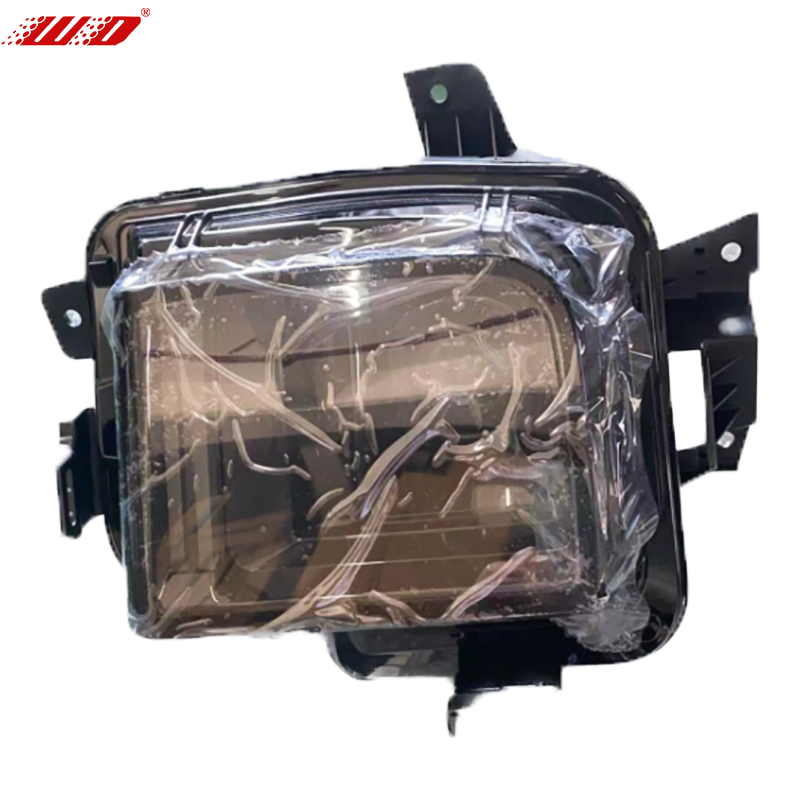
Taillights are safety-critical auto spare parts governed by strict photometric regulations in every major market. A replacement taillight must meet minimum luminous intensity requirements — in the EU under ECE Regulation R7, in the US under FMVSS 108 — to be legally installed on a road vehicle. Non-compliant taillights that fail minimum intensity thresholds increase rear-end collision risk and expose vehicle owners to roadworthiness inspection failures and insurance claim rejections.
LED vs. Halogen Taillights: Why LED Has Become the Practical Standard
LED taillights have replaced halogen bulb assemblies as the dominant technology in OEM and aftermarket applications for compelling performance reasons. An LED taillight reaches full luminous output in approximately 0.2 milliseconds, compared to 150–200 milliseconds for a halogen filament to heat to full brightness. At highway speeds of 110 km/h, this response time difference gives a following driver an additional 5.5 meters of stopping distance awareness — a meaningful safety margin.
- Service life: Quality LED taillights are rated for 30,000–50,000 hours vs. 500–1,000 hours for halogen bulbs, dramatically reducing replacement frequency.
- Power consumption: LED taillights consume 70–80% less power than equivalent halogen units, reducing alternator load and fuel consumption in conventional vehicles.
- Design flexibility: LED arrays allow thinner, lighter assemblies with complex optical signatures that serve as vehicle identity marks — many OEM taillights are now brand-recognition elements, not just functional lights.
- Compatibility consideration: Retrofitting LED taillights into vehicles originally wired for halogen bulbs may trigger a hyperflashing fault code. A load resistor or CANbus-compatible LED module is required to prevent this.
Hella Lights: Why OEM-Tier Lighting Matters for Safety and Resale
Hella is one of the largest OEM lighting and electronics suppliers globally, producing headlights, taillights, fog lights, turn signal assemblies, and interior lighting for manufacturers including Volkswagen Group, BMW, Mercedes-Benz, Ford, and General Motors. When a vehicle originally equipped with Hella lighting requires replacement, specifying genuine Hella or Hella-equivalent OEM-tier lighting preserves photometric beam pattern accuracy, ECE/SAE compliance, and integration with adaptive lighting control modules that cheaper alternatives cannot guarantee.
Hella Product Categories Relevant to Aftermarket Sourcing
| Product Category | Technology | Key Vehicles | Aftermarket Note |
|---|---|---|---|
| Xenon/HID Headlights | D1S/D2S/D3S bulb | VW, Audi, BMW (2000–2015) | Ballast and bulb must be matched brand |
| LED Module Headlights | Multi-LED array | Modern VW Group, Ford Focus, Opel | Non-replaceable LED module in many units |
| Rear Combination Lights | LED / Halogen hybrid | Broad European vehicle range | ECE compliance marking required |
| Fog and Auxiliary Lights | Halogen / LED | Universal fitment available | Beam pattern must meet road legal standard |
For buyers sourcing Hella lights through distributors or online channels, verify the ECE approval number molded into the lens housing. Counterfeit Hella products are prevalent in online marketplaces; genuine units carry a traceable approval code beginning with an "E" followed by the country code of the certifying authority (e.g., E1 for Germany, E11 for UK).
How to Evaluate Auto Spare Part Suppliers: OEM, OES, and Aftermarket
The aftermarket is divided into three supply tiers, each with distinct quality, pricing, and warranty implications. Understanding these tiers is essential for buyers sourcing at volume — whether for a repair workshop, parts distributor, or fleet operator.
- OEM (Original Equipment Manufacturer): Parts produced by or under license from the vehicle manufacturer. Highest fitment accuracy, full warranty support, and compliance documentation. Typically 40–100% more expensive than equivalent aftermarket parts.
- OES (Original Equipment Supplier): Parts produced by the same factory that supplies the OEM — sold without the car brand's logo under the supplier's own brand (e.g., Hella, Bosch, Valeo, Magna). Often identical in specification to OEM parts at 15–30% lower cost. This is the best value tier for most professional repair applications.
- Quality Aftermarket: Independent manufacturers producing parts to equivalent or near-equivalent specification. CAPA-certified body parts and ECE-approved lighting fall into this category. Cost is typically 30–60% below OEM pricing with acceptable quality for most non-safety-critical applications.
- Economy Aftermarket: The lowest cost tier, often with no certification, loose dimensional tolerances, and inferior materials. Acceptable for very low-value vehicles being repaired to minimum roadworthy standard only; not appropriate for insurance repair work or vehicles where resale value matters.
Practical Checklist When Sourcing Auto Body Parts and Lighting
For buyers placing orders across multiple product categories — bumpers, car doors, side mirrors, taillights, LED lights, and Hella lighting assemblies — a standardized sourcing checklist prevents the most common and costly procurement errors.
- Confirm OEM part number compatibility against the vehicle's VIN-decoded parts list before ordering any body part or lighting assembly.
- Verify certification marking — CAPA for North American body parts, ECE/e-mark for European lighting, DOT compliance for US lighting.
- Specify trim and equipment level explicitly for car doors and side mirrors to ensure all sensor mounting points, wiring harness connectors, and feature integration points are present.
- Request dimensional inspection reports from bumper factory suppliers for high-volume orders to catch fitment deviations before parts reach the workshop.
- Confirm LED taillight and headlight CANbus compatibility before fitting to vehicles with digital body control modules to avoid fault code generation and hyperflash issues.
- Check supplier warranty terms — reputable OES and quality aftermarket suppliers offer 12–24 month warranties on lighting and body parts; absence of a warranty is a reliable indicator of economy-tier quality.