 English
 русский
 Español

A 2022 sedan comes in with a torn bumper cover, and your estimator has three quotes on the screen: $520 OEM, $310 CAPA-certified, $180 uncertified aftermarket. The customer points at the cheapest line. You are the one who has to answer the phone when the gaps do not line up and the paint starts lifting at the corner.
So let us settle the question before the estimate gets locked. CAPA certification is worth paying for when three conditions hold: the part sits inside a category CAPA actually tests, the job is insurer-funded or on a late-model vehicle, and the premium over an uncertified equivalent stays roughly within 20 to 25 percentage points. Outside those conditions, the seal buys you less than the invoice suggests.
The short verdict
Worth it for bumper covers, fenders, hoods and lamp assemblies on vehicles still carrying collision coverage, because the certified part is the one you can defend on a supplement. Not worth it when the part falls outside CAPA's scope, when the vehicle's value makes a $130 gap decisive for the customer, or when the seller cannot show a verifiable seal number.
Content
- 1 What CAPA Certification Actually Verifies
- 2 Price Reality: Typical Ranges by Part Category
- 3 The Hidden Cost: Rework Rate Is the Whole Argument
- 4 Where Certified Parts Fit in a Typical Parts Mix
- 5 A Five-Step Buying Routine That Prevents Regret
- 6 The Coverage Gap: Chinese EV Brands in a CAPA World
- 7 Maintenance, Records and Compliance
What CAPA Certification Actually Verifies
CAPA — the Certified Automotive Parts Association — does not manufacture anything. It is a nonprofit standards body that certifies aftermarket collision parts against published requirements, then allows the maker to apply a numbered seal. The certification rests on four checkpoints, and each one maps to a specific failure mode you have probably seen in the shop.
1. Facility approval
The plant is audited before any part is listed. This filters out trading desks that rebrand whatever tooling is cheapest that quarter.
2. Vehicle test fit
The part is installed on the actual vehicle and checked for panel gaps, mounting alignment and function — not measured on a bench and assumed to transfer.
3. Ongoing surveillance
In-plant inspection continues after approval, and parts are pulled from ordinary distribution and re-tested. A tool that degrades over time gets caught.
4. Warranty backing
Certified parts carry a warranty tied to the seal. That matters less for the money than for the paper trail when a customer disputes a repair.
What the seal does not guarantee
- Identical tooling to the OEM stamping. The standard is fit, material and performance — not a clone of the original die.
- Coverage of every category. Many mechanical, electronic and high-voltage EV components sit outside CAPA's published standards entirely.
- Labor. Rework time is your cost, not the certifier's.
- Authenticity on its own. Ask for the seal number and check it; stickers get photocopied.
For a deeper read on how OE, OEM and aftermarket definitions overlap, this comparison of OEM versus OE parts is a useful primer before you set a shop-wide purchasing rule.
Price Reality: Typical Ranges by Part Category
The certification premium is not uniform. It compresses on simple, high-volume stampings and widens on parts with complex geometry or optics, where tooling cost and scrap rates climb. The grid below shows where the money usually lands.
Ranges reflect typical US collision-market quotes and shift by brand, volume and freight. Validate against your own supplier pricing before you build a rule around them.
Read the table the other way and the real gap appears: certified parts land roughly 30 to 45 points under OEM, while uncertified parts go 50 to 70 points under. The certification premium is therefore a narrow band, usually $80 to $150 on a bumper job — small enough that a single comeback erases it.
The Hidden Cost: Rework Rate Is the Whole Argument
Price comparisons stop at the invoice, but the part keeps costing money after installation. A bumper cover that needs the mounting tabs slotted, or a lamp that fogs in the first rain, turns a margin into a loss. The bars below show a planning index for rework frequency by sourcing type.
Treat those numbers as a model, not a survey — replace them with your own comeback log and the argument becomes personal. Take a bumper job with 3.0 hours of body labor at $60, plus $120 in refinish materials and $40 in paint. One rework cycle costs about $340 in absorbed time. At 15% that is roughly $51 of expected cost per job; at 4% it is about $14. The $130 premium is not recovered by rework savings alone.
Where it does pay back is cycle time and authorization. A certified part keeps a supplemental claim clean, keeps the vehicle out of the second bay, and keeps the insurer from questioning the line item. That is the return — not the sticker price.
Where Certified Parts Fit in a Typical Parts Mix
Shops rarely commit to one sourcing tier. A workable split for a mid-volume collision operation looks like this planning model.
- Certified tier: insured repairs, vehicles under eight years old, anything with a radar or camera bracket that has to sit in a fixed position.
- OEM tier: structural members, high-voltage housings, one-off trims and any part where the certified aftermarket version simply does not exist.
- Uncertified tier: older customer-pay vehicles, cosmetic parts on a second-hand lot car, and anything the customer has explicitly approved in writing after seeing the price difference.
A Five-Step Buying Routine That Prevents Regret
Most bad buying decisions happen before the part arrives, not after. Run this sequence on every order where certification is claimed.
- Confirm scope. Check that the part category is actually covered by a published CAPA standard. A seller claiming certification for an uncertifiable component is the first red flag.
- Match the build. Year, trim and configuration change the part. Two visually identical lamp assemblies can differ by connector and beam pattern.
- Verify the seal number. Record it on the repair order. If it cannot be produced, price the part as uncertified.
- Do the math per job. Compare the certified quote against OEM and the uncertified quote side by side, then add expected rework cost. If the certified part is within 35 points of OEM, take it.
- Inspect on receipt. Test-fit before paint. Once a cover is sprayed, the return argument gets harder.
The Coverage Gap: Chinese EV Brands in a CAPA World
Here is the part most articles skip. CAPA's catalog grew around the North American vehicle population, so for a Li Auto L7, a ZEEKR 001 or a Leapmotor C11, a certified option frequently does not exist — the choice collapses to OEM versus uncertified aftermarket. That does not mean you lower your standards; it means you replace the seal with documentation.
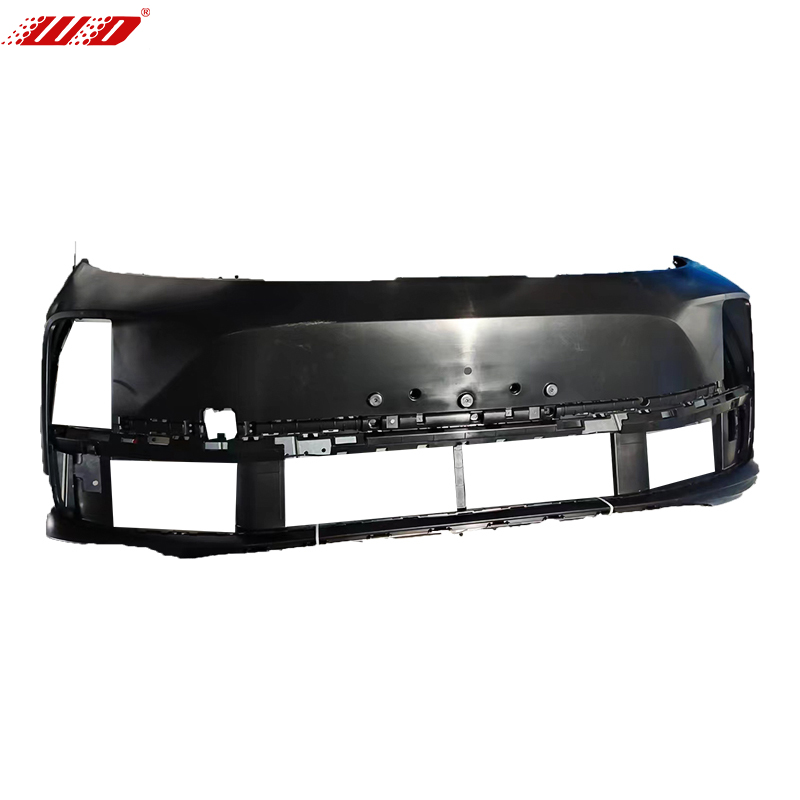 Li Auto L7 Front Bumper X03-28030020Check part number X03-28030020 and listed 2100×850×680 mm dimensions for this WD L7 front bumper when certified aftermarket options are unavailable.View Product →
Three checks carry most of the weight. First, part number matching: body panels for these models are catalogued by the manufacturer's number, and a genuine L7 front bumper carries a specific code that a generic listing will not. Second, configuration matching: ZEEKR 001 parts are split between the 21-model and 24-model builds, and lamp assemblies differ by high and low configuration. Third, supplier accountability: ask who stands behind the part and for how long.
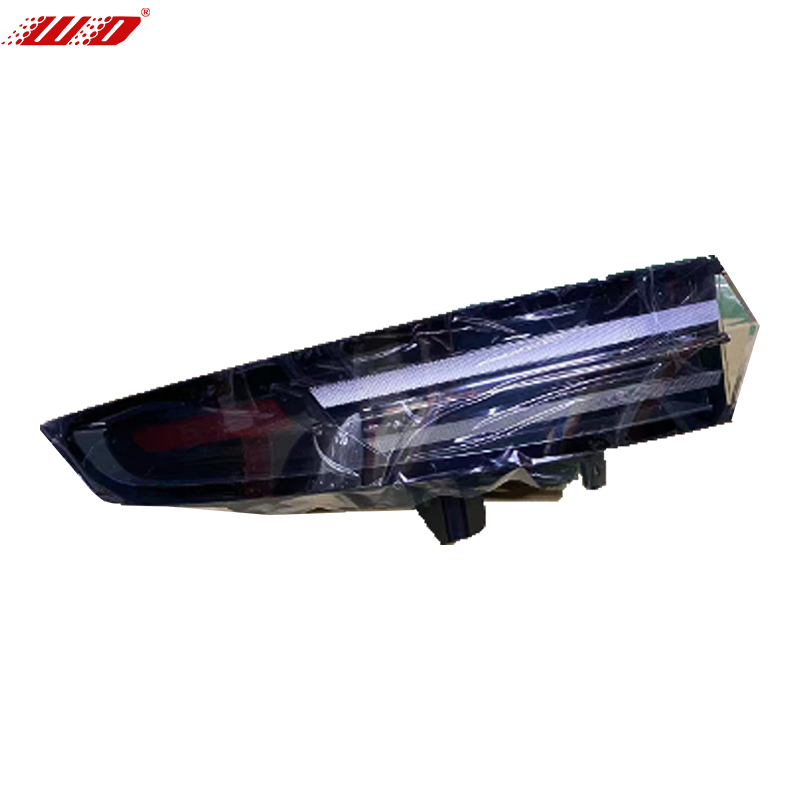
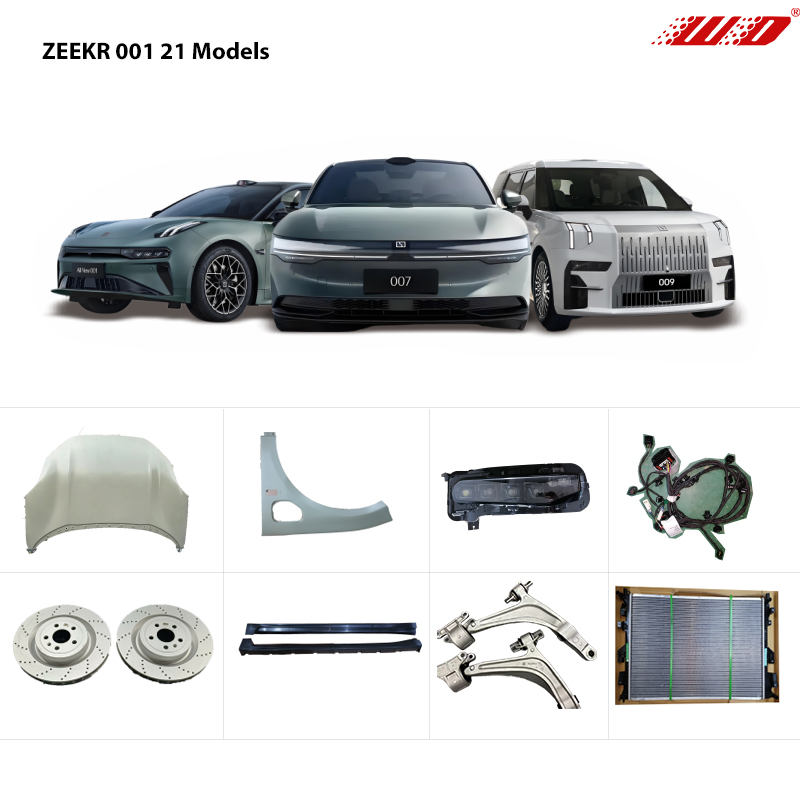 ZEEKR 001 21Models Left and Right HeadlightsFor 21-model ZEEKR 001, verify left or right part number 8892470492/8892470494 and listed ADB adaptive high-beam features before ordering.View Product →
On these vehicles a structured-fit approach beats a sticker. Buy from a source that publishes the exact model year, trim and side on the product page, and confirm the mounting points before commit. For shops building a supply line around these brands, the Li Auto parts catalog is organised by model and system, which makes trim verification faster than matching against a paper estimate.
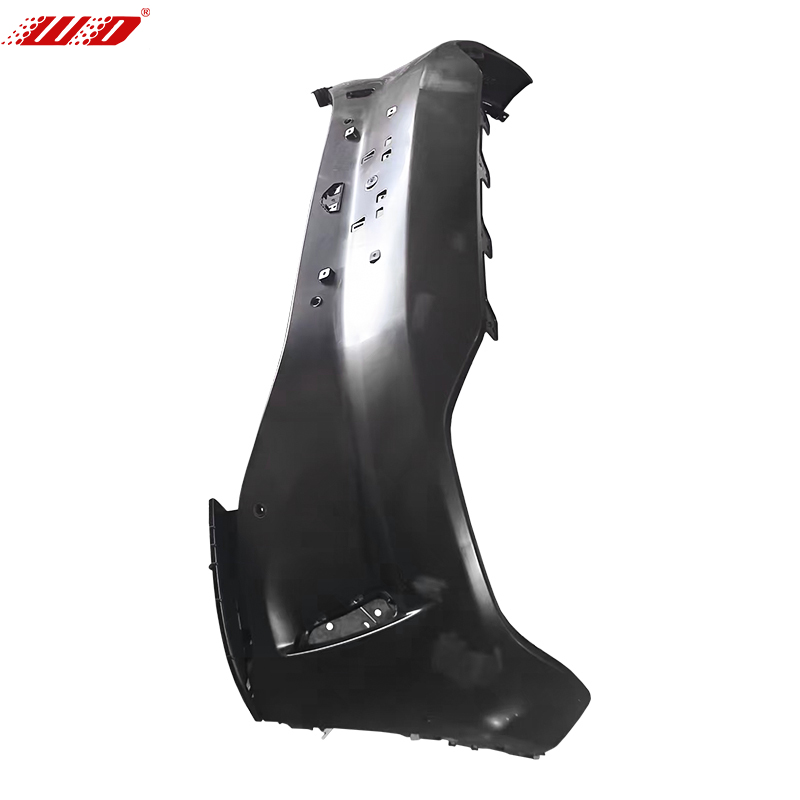 Leapmotor C11 Front Bumper Upper Shell AssemblyConfirm this is the upper shell—not the lower—and check the Leapmotor C11 model fit before quoting part 5110101-CA01SC02/CC018C02.View Product →
A Leapmotor C11 front bumper upper shell is a good example of a part where the upper and lower shells are separate SKUs and the two are frequently ordered wrong. Confirm the shell position and the model before you quote.
Maintenance, Records and Compliance
Certification only protects you if you can prove what was installed. A few habits keep a repair defensible months later.
- Photograph the seal, the part number label and the box before installation. Store them with the repair order, not on a phone that gets wiped.
- Keep the invoice showing the certified status of each line item. Insurer audits ask for this and suppliers rarely resend documents quickly.
- Check your state's disclosure rules for non-OEM parts used on customer vehicles. Several jurisdictions require written consent before installation, and the requirement varies by repair type.
- Store bumper covers and hoods flat and supported. Deformation in storage looks exactly like a manufacturing defect at test fit.
- Log every warranty claim by seal number. Pattern failures — moisture in lamps, flaking on trim — are worth reporting back to the supplier and worth remembering at the next quote.
The honest answer is that CAPA certification is worth it as a risk-control tool, not as a quality badge that guarantees perfection. It buys a tested fit, a documented material standard and a warranty trail — three things that shorten arguments with insurers and customers alike. What it does not buy is immunity from rework, and it will not help you at all on a vehicle where the certification does not exist.
So decide per line item, not per policy. Where the part is in scope, where coverage is paying, and where the premium sits inside that 20 to 25 point band, take the certified part and move on. Where it is not, get the part number, the build configuration and a supplier who answers the phone — and price the risk into the estimate instead of discovering it at the paint booth.