 English
 русский
 Español
Content
- 1 The Li Auto L6 Front Bumper Is an Integrated Sensor Platform, Not Just a Body Panel
- 2 Sensor Inventory and Calibration Dependencies
- 3 Active Grille Shutter Integration and Electrical Disconnection
- 4 Bumper Cover Material and Repair vs. Replacement Thresholds
- 5 Fastener Map and the Removal Sequence
- 6 Wiring Harness Routing and Connector Protection
- 7 Aftermarket Bumper Considerations and Fitment Verification
- 8 Reassembly Order and Post-Installation Verification
The Li Auto L6 Front Bumper Is an Integrated Sensor Platform, Not Just a Body Panel
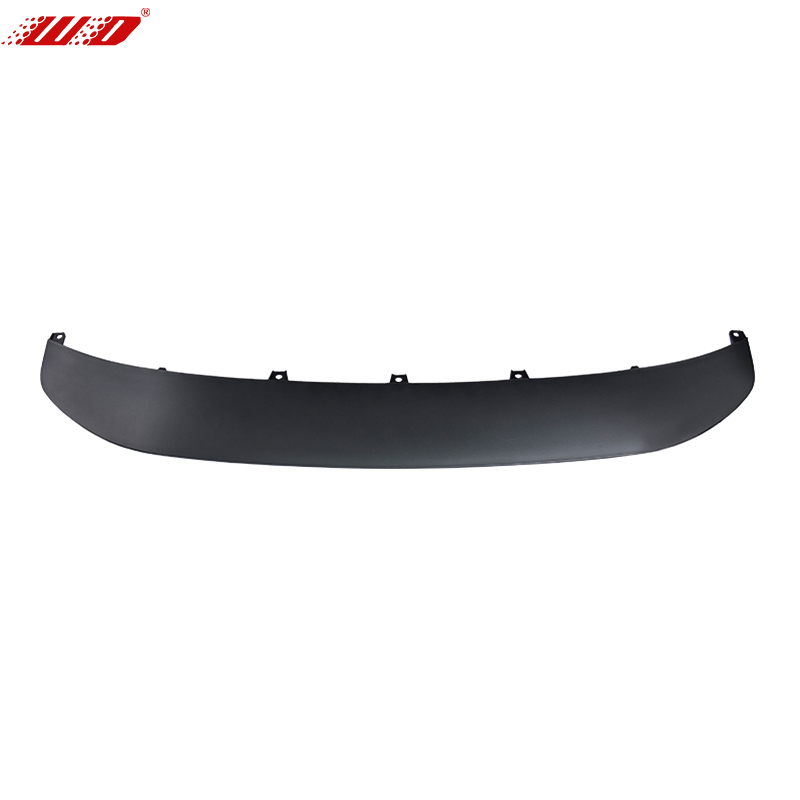
Removing or replacing the front bumper on a Li Auto L6 requires understanding that this component functions as a precision sensor mounting platform in addition to its role as an impact-absorbing exterior panel. The bumper cover houses the forward-facing millimeter-wave radar, multiple ultrasonic parking sensors, the front-facing camera assembly integrated into the grille area, and wiring harnesses that route through dedicated channels molded into the bumper's inner structure. Disconnecting and reconnecting these components without proper calibration procedures results in ADAS fault codes and potentially disabled driver-assistance features. The bumper assembly on the L6 is secured by a combination of visible fasteners along the upper grille and hood line, plus concealed bolts and clips accessible only after removing the front wheel arch liners and the under-engine splash shield. A complete removal involves approximately 18 to 22 fasteners of varying types across the upper radiator support, both fender joints, and the lower valance, with the most commonly overlooked fasteners being the two bolts tucked inside each front wheel well behind the fender liner at the bumper-to-fender bracket junction.
Sensor Inventory and Calibration Dependencies
The Li Auto L6 front bumper carries a specific suite of ADAS sensors that must be identified before any disassembly begins. The central component is the forward millimeter-wave radar unit mounted behind a flat fascia panel in the lower grille opening. This radar requires precise angular alignment; even a one-degree mounting deviation shifts the radar beam enough to cause adaptive cruise control and automatic emergency braking system errors. Flanking the radar are four ultrasonic parking sensors—two in the outer bumper corners and two inboard near the license plate area—that press-fit into molded brackets bonded to the bumper cover. The front surround-view camera sits within the grille mesh at the center-top of the bumper, secured by a clip-in housing that also contains a heating element for de-icing. Each of these sensors communicates through a dedicated connector on the main bumper wiring harness, which terminates at a single multi-pin bulkhead connector located behind the passenger-side headlight assembly.
Radar Bracket Alignment and the Reason Aftermarket Bumpers Require Recalibration
The radar bracket on the L6 is not bolted to the chassis; it is riveted or heat-staked to the inside of the bumper cover itself. When an aftermarket or replacement bumper is installed, the radar mounting plane can shift by up to 2 millimeters relative to the original factory position, which is enough to generate a radar misalignment diagnostic trouble code. The corrective action is a static radar calibration procedure performed with the vehicle parked on a level surface facing a calibrated radar target board at a specified distance, using the Li Auto diagnostic software to place the radar module into alignment mode. This is not a task that can be bypassed by clearing codes with a generic OBD-II scanner.
Active Grille Shutter Integration and Electrical Disconnection
The Li Auto L6 is equipped with an active grille shutter system mounted directly behind the front bumper grille openings. These motorized louvers modulate airflow to the radiator and condenser based on cooling demand, improving aerodynamic efficiency when closed. The shutter assembly is mechanically attached to the bumper support beam but electrically linked through the bumper wiring harness. Before the bumper can be fully removed, the shutter motor connector must be disconnected from the main harness. This connector is often overlooked during removal and can be damaged if the bumper is pulled away from the vehicle with the connection still engaged. The shutter module also stores position data; if the shutters are manually forced open or closed during bumper removal—such as to access a hidden bolt—the module may lose its position reference and require a relearn procedure through the vehicle's diagnostic interface after reassembly.
Bumper Cover Material and Repair vs. Replacement Thresholds
The Li Auto L6 front bumper cover is injection-molded from a polypropylene copolymer with a nominal wall thickness of 2.8 to 3.2 millimeters, a material selection that balances weight, impact resilience, and repairability. Polypropylene copolymer can be plastic-welded when cracked, but the repair viability depends on the crack location and the presence of sensor mounting bosses in the damaged area. Cracks that extend through a radar bracket mounting point or an ultrasonic sensor boss effectively total the bumper cover because the repaired mount will not hold the sensor within the required positional tolerance. The bumper is finished with a waterborne basecoat and two-component urethane clearcoat applied over an adhesion promoter specifically formulated for polypropylene substrates. When repainting, the adhesion promoter application is mandatory—skipping it results in paint delamination within the first year due to polypropylene's inherently low surface energy of approximately 29 dynes per centimeter in its untreated state.
Common Impact Damage Patterns
Low-speed parking impacts on the L6 typically fracture the lower grille surround and the vertical stanchions that connect the lower valance to the main bumper beam. These stanchions are molded as integral features of the bumper cover and cannot be replaced separately. A cracked stanchion that allows the lower bumper section to flex more than 5 millimeters under hand pressure indicates structural compromise that a plastic weld may not adequately restore, and replacement is the recommended repair path to ensure the bumper maintains its designed impact energy management characteristics.
Fastener Map and the Removal Sequence
A systematic approach to removing the Li Auto L6 front bumper prevents broken tabs and lost fasteners. The removal sequence begins from the top and works downward and outward. The first group consists of push-type plastic rivets along the upper radiator cover panel, typically six to eight fasteners with a phillips or flat-blade center pin that retracts to release. The second group includes the bolts at each fender-to-bumper bracket, accessed after the front section of the wheel arch liner is peeled back—these are usually M6 flange bolts with a 10-millimeter head. The third group is under the vehicle: a row of push clips and possibly two M8 bolts securing the lower bumper lip to the subframe crossmember. The fourth and final group consists of the upper grille clips that snap into the hood latch support; these release by pulling the bumper forward evenly after all other fasteners are removed.
| Location | Fastener Type | Approximate Quantity | Tool Required |
|---|---|---|---|
| Upper radiator cover | Plastic push rivets | 6–8 | Trim removal tool, Phillips driver |
| Fender-to-bumper bracket (each side) | M6 flange bolts + push clips | 2 bolts, 2 clips per side | 10mm socket, trim tool |
| Lower bumper to subframe | Push clips, M8 bolts | 4–6 clips, 2 bolts | 13mm socket, trim tool |
| Upper grille to hood latch support | Spring clips, integrated | 4–6 | Pull evenly by hand |
Wiring Harness Routing and Connector Protection
The Li Auto L6 front bumper wiring harness runs along the inside of the bumper beam from the passenger side toward the driver side, with breakout connectors at each sensor location. The harness is secured by adhesive-backed routing clips spaced approximately every 15 centimeters along the inner bumper surface. During bumper removal, these clips should be released from the bumper side rather than pulling the harness from the clips, because the adhesive bond to the bumper is stronger than the clip's grip on the harness and pulling the wire can stretch or internally fracture the conductor strands without visible insulation damage. The main harness connector at the passenger-side headlight area uses a lever-lock mechanism that must be rotated to the open position before the connector halves can be separated; forcing the connector apart without releasing the lever will break the locking tab and require a replacement connector body to ensure a weather-tight seal upon reassembly.
Aftermarket Bumper Considerations and Fitment Verification
The aftermarket for Li Auto L6 front bumpers includes both OEM-equivalent replacements and restyled options. When installing a non-OEM bumper, specific dimensional checks prevent downstream problems. The gap between the bumper upper edge and the hood leading edge must be uniform at 3.5 to 4.5 millimeters across the full width; a wider gap on one side indicates a misaligned mounting bracket or an out-of-spec bumper mold. The headlight-to-bumper gap at the lower headlight contour is equally critical—any interference at this interface will abrade the headlight lens coating over time. Sensor holes in aftermarket bumpers must be checked with the actual sensors before painting; an undersized hole can be reamed to specification, but an oversized hole leaves the sensor loose and creates a water intrusion path. The radar bracket flatness must be verified with a straightedge across the mounting surface; any warp exceeding 0.5 millimeters will cause calibration failure.
Reassembly Order and Post-Installation Verification
Reassembly of the Li Auto L6 front bumper follows the reverse order of disassembly but with a critical check at the midpoint: all sensor connectors must be engaged and the main harness connector lever locked before the bumper is fully seated onto its mounting points. Once the bumper is loosely hung on the upper grille clips, reach behind from underneath and verify each ultrasonic sensor connector by feel, then connect the main harness and lock the lever. Only then should the side brackets be torqued and the upper and lower fasteners installed. After the bumper is fully secured and the vehicle is powered on, the instrument cluster and central display should be checked for any ADAS fault warnings. If the radar or camera has been disturbed, the vehicle will display a specific message indicating calibration is required. The engine should also be run to operating temperature to verify that the active grille shutters cycle through their self-test sequence—visible as an open-close-open movement of the louvers within approximately 30 seconds of engine start. If the shutters do not move, the shutter motor connector is likely not fully seated or the module requires a position relearn.
- Connect all sensors and lock the main harness lever before fully seating the bumper on its mounts.
- Torque fender bracket bolts to specification; overtightening cracks the plastic bracket.
- Verify active grille shutter self-test cycle upon first engine start after reassembly.
- Check instrument cluster for ADAS fault warnings; any radar or camera disturbance requires calibration.