 English
 русский
 Español
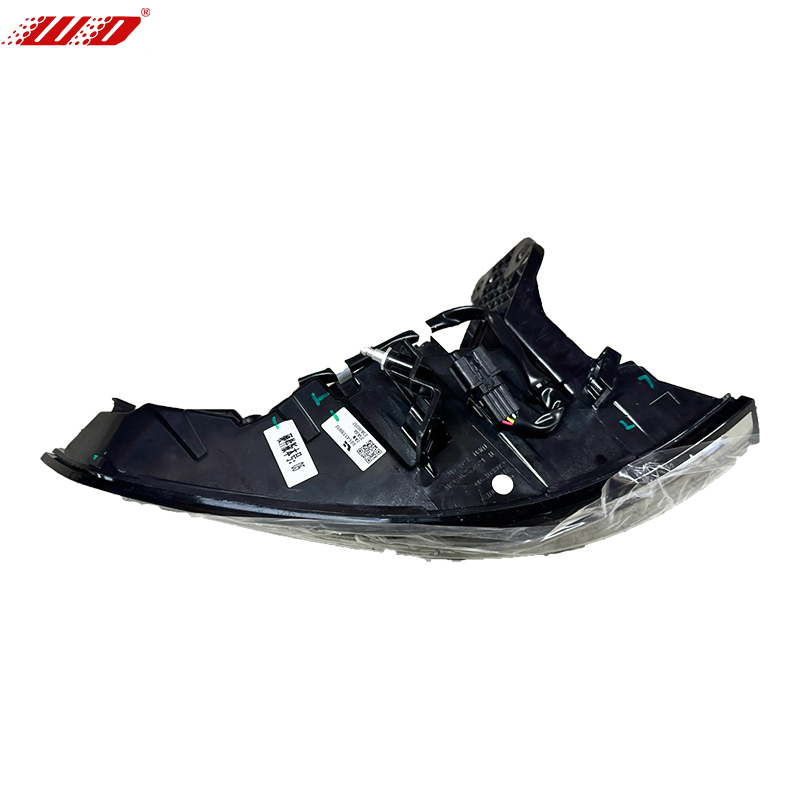
A body shop orders a front bumper for a 2022 Geely Coolray. The crate arrives with a plain label, no certification number, and a price that looks excellent. Three weeks later the same shop orders a ZEEKR 001 headlamp from another supplier, and the box carries a small circular seal printed with four letters: CAPA. The headlamp costs more, and the difference has almost nothing to do with the plastic or the lens.
That difference is the point of this article. The CAPA logo is not a car brand, not a parts manufacturer, and not decoration. In the collision repair aftermarket it is a certification seal, and it changes what you are allowed to assume about a part before it goes onto a customer's vehicle.
The short answer
For automotive buyers, the CAPA logo is the seal of the Certified Automotive Parts Association, an independent United States certification programme for aftermarket collision parts. It confirms that a part design has been tested against a published standard for fit, material, and finish. In healthcare, education, and media the same four letters stand for completely different organisations, which is why a single search returns a physician association, an arts high school, and a photo agency.
Content
Search the phrase and you will see at least four different marks. They share a spelling and nothing else, because CAPA is an acronym that several organisations adopted independently of one another.
- Certified Automotive Parts Association — a non-profit that runs an independent quality programme for aftermarket collision parts. This is the CAPA behind the seal on bumpers, hoods, fenders, doors, and lamps.
- California Academy of Physician Associates — a professional healthcare association whose anniversary logo ranks frequently for the term.
- Philadelphia High School for Creative and Performing Arts — a public arts school that uses the letters as its official mark.
- CAPA Pictures and similar creative projects — media, church, and design portfolios that took the name for themselves.
If you are buying parts, only the first entry matters. The rest is a coincidence of spelling, and none of those marks has any meaning on a repair order.
How to Read a CAPA Seal
The mark is small, so it is easy to overlook. Four details carry the real information.
The seal and the number
A CAPA mark usually appears as a circular sticker or printed label carrying the words CAPA Certified together with a unique certification number. The number is the useful half. It lets a buyer trace the part back to a certified production batch instead of trusting a word printed on a carton.
What the programme examines
Certification is organised by part category, so bumpers, hoods, fenders, doors, and lamps each follow their own standard. The testing covers dimensional fit against a reference part, material composition, coating adhesion, impact behaviour, and, for lighting, light output and beam pattern.
What the logo does not promise
A seal does not convert an aftermarket part into an OEM part, does not transfer the vehicle manufacturer's warranty, and does not confirm that the part suits your exact trim level or model year. It narrows uncertainty; it does not remove the need to match a part number.
Where the mark appears
On outer packaging, on the back of a lamp housing, or on a sticker applied to a primed panel. Because the label is small and easy to destroy during paint preparation, photograph it before installation if a warranty claim may follow.
Part numbers carry more weight than seals do. A left front door listed for a Leapmotor C10 and one listed for a C11 are different parts, and even a correct door shell may not include the trim, brackets, or weatherstrip you intend to reuse from the damaged one.
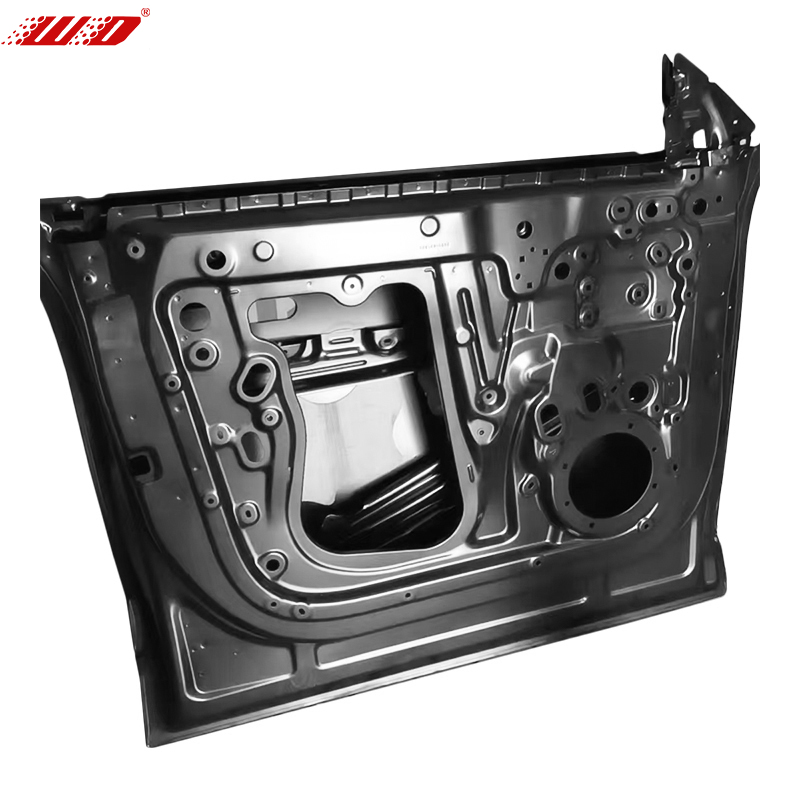 6211100-CA01DY - Genuine Leapmotor C11 Left Front Door AssemblyEngineered with precision and crafted to uphold the highest standards of automotive excellence, the 6211100-CA01DY - Genuine Leapmotor C11 Left Front Door Assembly rep...View Product →
Sorting Leapmotor C11 body system parts by position and configuration removes most of that risk before a single crate is opened, and it gives you a clean reference when the supplier asks which version of the car you are repairing.
Genuine, Certified Aftermarket, and Everything Else
The gap between OEM and aftermarket parts is not a single line. There are at least three tiers, and they behave differently on a repair order.
The middle column is where most professional buyers land. It is not a compromise between quality and price; it is a documented product with a named standard behind it, which is exactly what an insurer or a fleet manager needs to see in a file.
What Certification Costs, and What It Buys
Cost is usually the reason the question gets asked in the first place. The index below compares landed cost for one ZEEKR 001 headlamp assembly across four sourcing routes, with the genuine part set at 100.
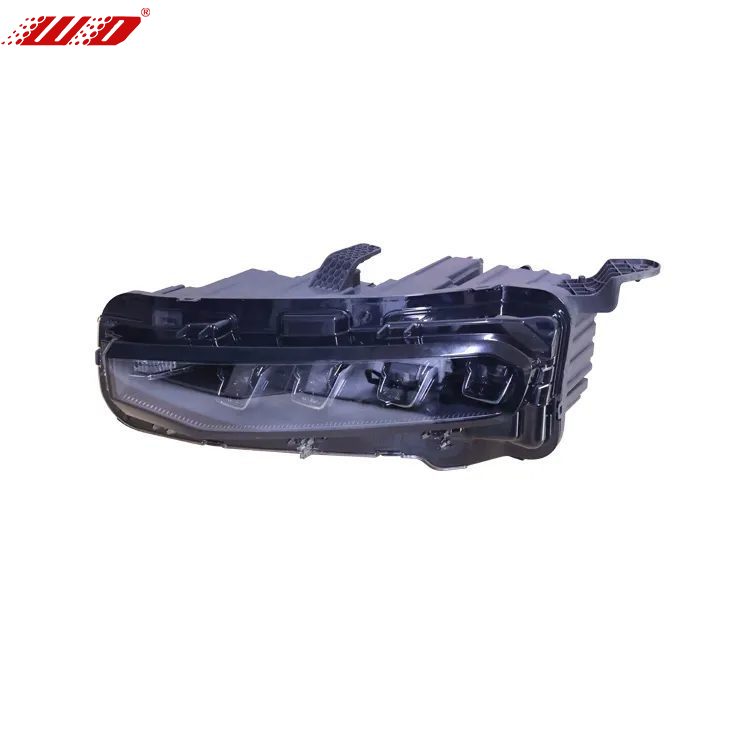 8892470492, 8892470494 Headlamp – Suitable for ZEEKR 001The Left Right Headlamp Assembly for Zeekr 001 (OEM Part Numbers 8892470492 and 8892470494) is a premium, factory-spec lighting solution designed to restore the origin...View Product →
100
65
42
74
Certification typically adds a quarter to a third over an uncertified equivalent and still lands well below a genuine part. The extra money buys documentation, a traceable batch, and a supplier who expects to be asked questions about fit and finish.
The fourth bar is the reminder most buyers learn the hard way. On a modern vehicle, labour decides the final number. A headlamp replacement on a car with driver assistance cameras usually needs a static or dynamic recalibration, and that work costs the same whether the lamp was genuine or certified. Saving forty index points on the part to spend them again on a repeat visit is not a saving.
Who Actually Drives Demand for Certified Parts
Certification survives because a specific set of buyers has to justify whatever they install on a customer's car. Demand for documented aftermarket collision parts splits roughly like this.
- Collision repair shops — 46%. Insurance-funded work, lifetime repair guarantees, and repeat customers make documentation non-negotiable here.
- Distributors and parts traders — 27%. They resell to workshops, so a traceable batch protects them from returns and arguments.
- Fleet and insurance programmes — 17%. Their approval lists usually specify genuine or certified parts, and nothing else clears the audit.
- Retail and DIY buyers — 10%. Price dominates, and certification is only meaningful when a vehicle is still under warranty.
The pattern explains why certification programmes concentrate on high-volume collision categories such as bumper covers, hoods, fenders, and lamps. Those are the parts that move through insurers and workshops in volume, and those are the parts where a rejected fit costs everybody a second repair.
A Six-Step Buying Sequence
A seal only helps if the other five decisions are correct. Run them in this order.
1. Lock the part number first
Confirm VIN, model year, trim, and left or right position before price. Configuration matters: a high-configuration lamp and a low-configuration lamp for the same vehicle are not interchangeable.
2. Decide whether certification is required
Insurer-paid repairs, lease returns, and fleet contracts commonly demand a genuine part or a certified equivalent. For an out-of-warranty cosmetic repair, an uncertified part can be a legitimate choice if the customer is told.
3. Ask for the number, not the word
Any supplier can print a word. Only a certified supplier can provide a certification number that matches the part in the crate. Put that number in the quote.
4. Check the interfaces that fail
Bumper brackets, radar and camera mounts, parking sensor holes, lamp connectors, and door hinge points. These are where an almost-correct panel turns into a second repair.
5. Price the whole job
Paint, blending, clips, fasteners, decals, and calibration belong in the quote. A cheap panel that needs an extra half litre of paint is not cheap.
6. Book the recalibration
Schedule camera and radar calibration before reassembly is finished, not after the customer has collected the car and returned with a warning light.
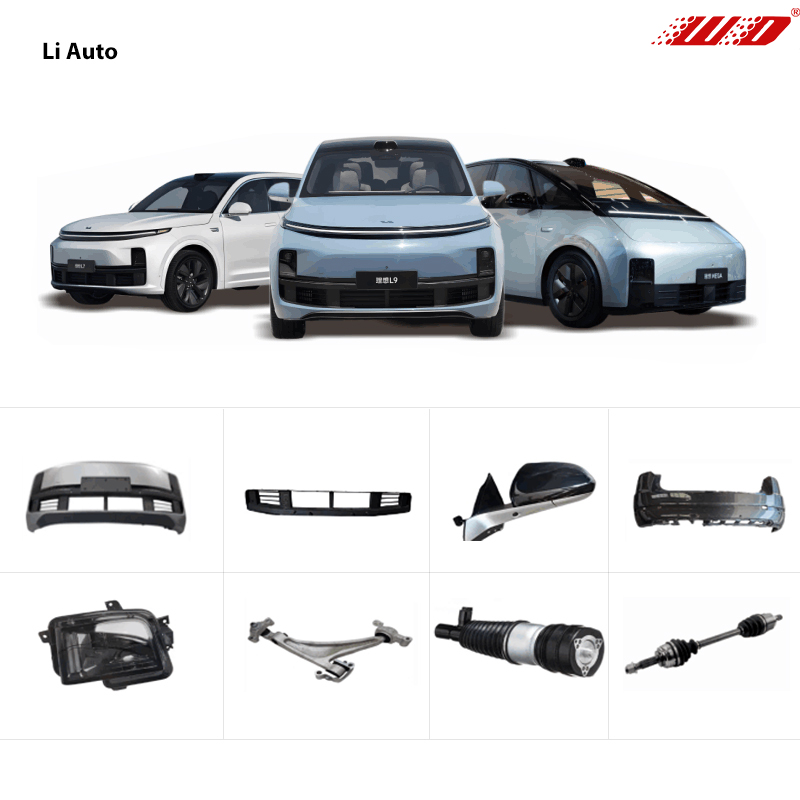
Panel families are a common trap in this process. A front bumper listed for the Li Auto L7 does not cross over to the L8 or L9 even though the platform is shared, because the cover, the grille inserts, and the sensor cut-outs differ between them.
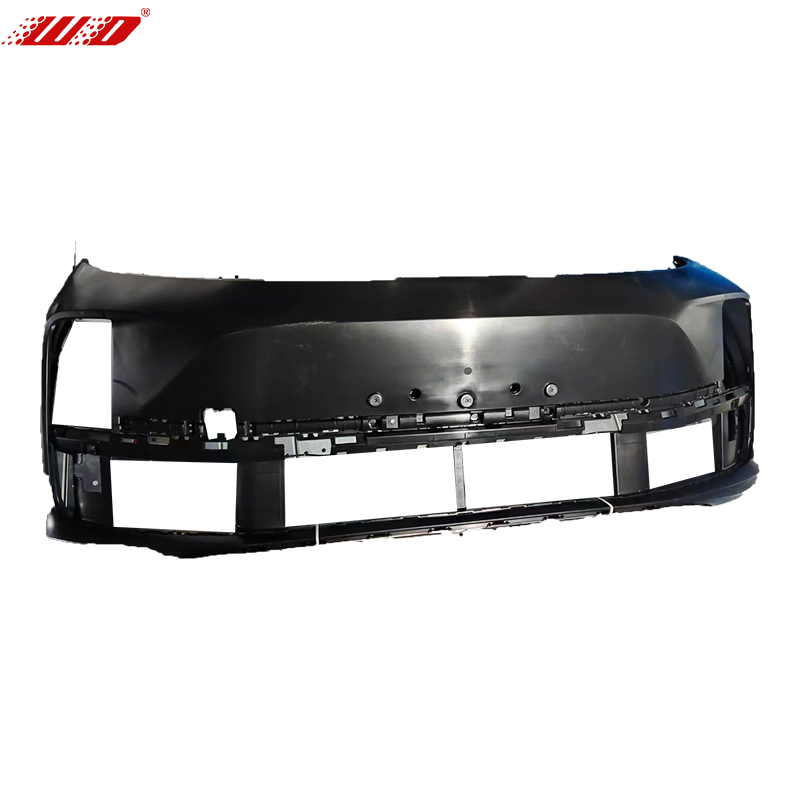 X03-28030020 -Li Auto L7 Front BumperX03-28030020-Front Bumper is a WD brand product, widely recognized as one of the most commonly used products on the market. Its popularity among customers reflects its...View Product →
Getting that match right at the quotation stage is worth more than any discount negotiated afterwards, because the cost of a wrong panel is measured in labour days, not in unit price.
Records, Warranty, and Compliance
Certification is only as strong as the paperwork that survives the repair. A short routine keeps a workshop protected.
- Photograph the seal, the certification number, and the part label before the panel is prepped or the lamp is fitted.
- File the invoice with the full part number, batch reference, supplier name, and purchase date so a warranty claim can be traced later.
- Confirm the warranty term in writing, including whether it covers labour, paint, or recalibration if the part fails.
- Follow the vehicle manufacturer's recalibration requirement after any lamp, bumper sensor, camera, or windshield work, and record that it was done.
- Check local rules covering lighting output, glazing, and any emissions-related component before fitting a non-genuine alternative.
- Keep customs, tariff, and country-of-origin documentation for cross-border shipments, since insurers and fleet auditors increasingly ask for it.
None of this is complicated, but all of it is difficult to reconstruct six months after a repair has left the bay. The record is what turns a certification seal from a sticker into evidence.
The CAPA logo answers one narrow question: has this aftermarket part design been independently tested against a published standard? For buyers working with Li Auto, ZEEKR, VOYAH, Leapmotor, and Geely models, that answer is worth having, but it is only part of a decision. The part number decides whether the component fits, the supplier decides whether the documentation is real, and the workshop decides whether the repair holds. Treat the seal as one input among three, and the four letters stop being confusing and start being useful.