 English
 русский
 Español
A repair shop owner orders three front bumpers for a batch of 2022 Geely Monjaro SUVs. The supplier calls them "OEM." When the crates open, the grille mounting clips sit 3 mm off, and the radar bracket is missing two locating tabs. The parts are not OEM. They are not CAPA-certified either. They are generic aftermarket pieces wearing a marketing label.
That is what the CAPA versus OEM debate looks like on the shop floor. The short version: for most collision repairers working on Chinese-brand vehicles, CAPA and OEM are not two parallel purchasing lanes. CAPA, the Certified Automotive Parts Association, is a non-profit that writes minimum performance standards for replacement crash parts and pays independent labs to verify them. It has no active certification program for Li Auto, ZEEKR, VOYAH, Leapmotor or Geely models. There is no line in the CAPA standard list, and no entry in the CAPA part database, for these vehicles. So when a Chinese EV rolls in, the question is not "CAPA or OEM." The question is whether you can source a genuine-equivalent part that actually fits, or whether you are stuck with a generic copy that almost fits.
The conclusion first: on Chinese-brand EVs, CAPA versus OEM is really a choice between factory-channel parts and generic aftermarket parts, not between two certification systems. When a supplier can supply the same part number, the same tooling and the same year-and-trim fitment as the vehicle maker, that is almost always the best value, typically landing at 60 to 70 percent of dealer pricing without the comeback risk.
CAPA only becomes a genuine third option when an actual certification program exists for the model in question. For Chinese brands, that day has not arrived, and it will not arrive soon. The reason is economics, not quality.
Content
What CAPA and OEM Actually Mean
Most of the confusion comes from treating two different categories of thing as if they were the same category.
CAPA: third-party verification of a replacement part
CAPA was founded in 1987 and issues minimum performance standards for crash replacement parts, then funds independent laboratory testing and plant audits to confirm parts meet them. The coverage is split by category: CAPA 301 for bumper covers, 302 for bumper reinforcements and absorbers, 303 for lighting, and so on. To carry the CAPA seal, a part has to pass dimensional comparison, material analysis, accelerated corrosion, and impact performance tests, benchmarked against the carmaker's own service part.
That system solved a real problem. In the 1980s and 1990s, aftermarket crash parts were wildly inconsistent. But CAPA's economics are driven by volume. Certifying a tool and a production line only pays back when a vehicle has enough units on the road to spread the cost across thousands of parts per year. This is why CAPA coverage clusters tightly around the highest-volume models in the North American fleet. It is, in practice, a US installed-base list.
OEM: a source, not a grade
OEM stands for original equipment manufacturer, meaning the company that builds parts for the vehicle maker. The term describes who produced the part. It does not, by itself, describe a quality tier or a specific distribution channel. The same tier-one supplier can run the assembly line part and an aftermarket version off the same tooling and the same drawing, and the difference is packaging and channel. Equally, a supplier can retool with a different material spec to cut cost, and the result will not survive a winter of road salt.
That is why two vendors both claiming "OEM" can ship parts that differ by a factor of three in durability. For a Geely, a Li Auto or a Leapmotor, credible OEM supply means the part number traces back to the vehicle maker's catalogue, the model year and trim level match, and the supplier can tell you who actually produced it. The real gap between factory-channel and generic aftermarket supply lives in those details, not in the label on the box.
CAPA-certified parts
- Verified by independent lab testing
- Coverage limited to high-volume US models
- Typically 20 to 40 percent below dealer list
- Seal and certificate number must be verifiable
- No program for Chinese-brand EVs today
Factory-channel parts
- Same tooling and drawing as the assembly part
- Part number matches the vehicle maker catalogue
- Year, trim and left-right variants are separated
- The only realistic route for Chinese brands
- Price sits between dealer and generic aftermarket
Generic aftermarket
- No independent performance verification
- Fitment measured in fractions of an inch, not millimetres
- Cheapest up front, costliest after the comeback
- Acceptable for some trim, risky for safety items
- Sensor and camera brackets often need rework
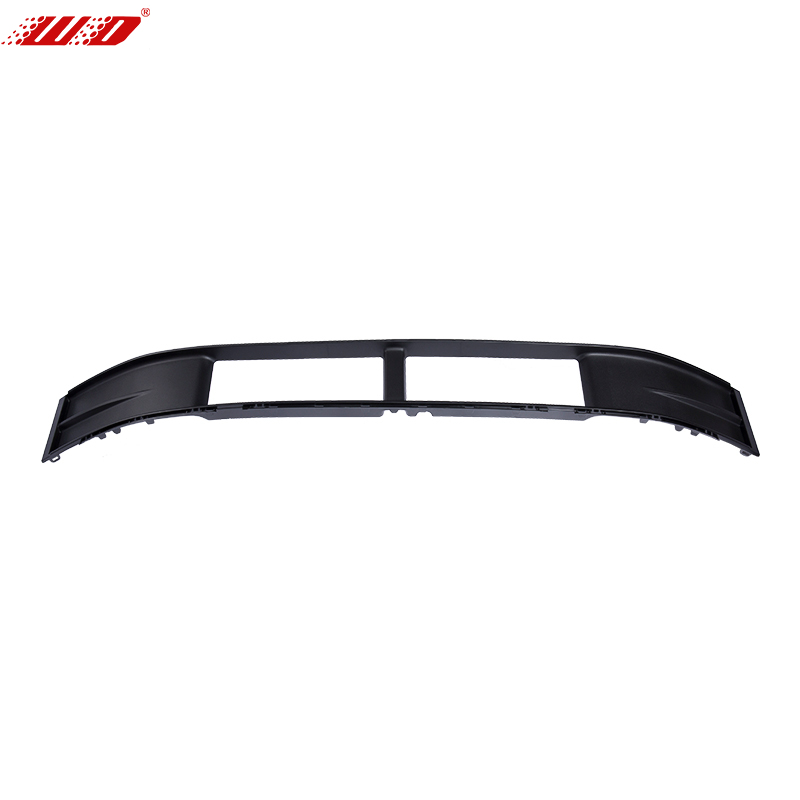
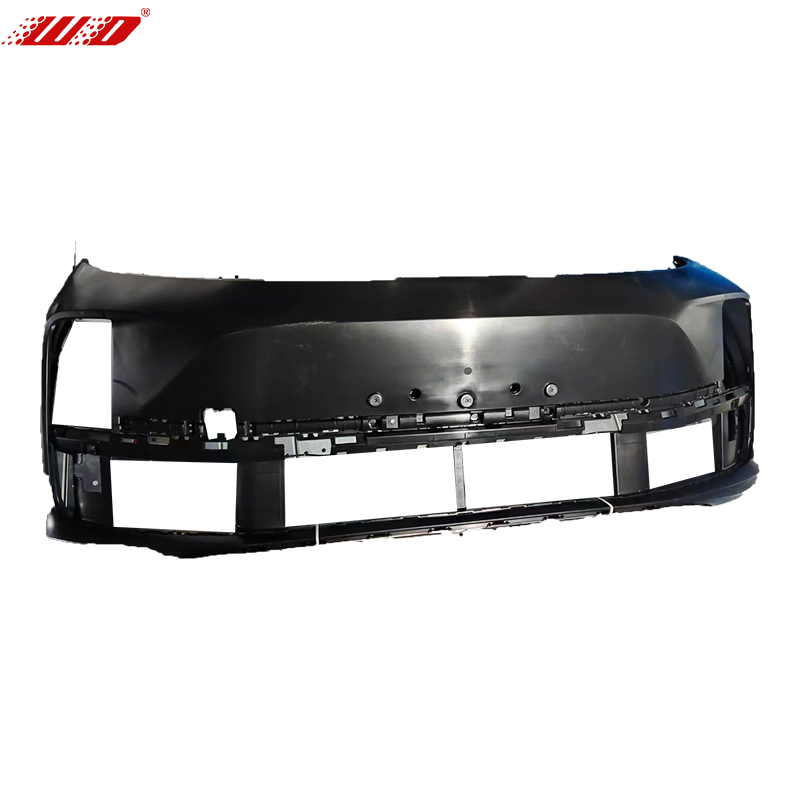 WD Front Bumper Replacement for Li Auto L7 Body SystemWD front bumper replacement for Li Auto L7 body system, listed at 2100 x 850 x 680 mm and 9.5 kg; fitment accuracy is critical.View Product →
Where the Money Actually Goes Wrong
Consider a front bumper cover for a Li Auto L7. The three sourcing routes diverge sharply on fitment and on the hidden labour that follows a bad fit. A cover that is 4 mm off at the bracket line is not a cosmetic problem: it drags the grille, the lower trim panel and the radar support out of position, and the shop eats two to three hours of rework that was never in the estimate. That rework, not the part price, is where cheap parts become expensive.
The comparison below uses typical market ranges rather than exact quotes, because pricing shifts with trim level, paint finish and regional freight. Use it as a shape, not a price list.
The Hidden Cost Curve
Up-front price is the most visible number and the least useful one. What decides whether a sourcing decision was smart is the ratio between part cost and total installed cost, including rework, paint mismatch and the second order you place when the first one fails. That ratio is where generic parts lose their advantage.
How Sourcing Splits Across a Real Repair Order
In practice, a collision job on a Chinese-brand EV is not sourced from one channel. Shops mix suppliers according to part risk. The pattern below reflects how a typical multi-panel repair order splits across sources, which is why a single "CAPA or OEM" answer does not exist.
- Dealer channel, 34 percent. Usually reserved for safety-critical or electronic parts where calibration matters, such as camera modules and airbag components.
- Factory-equivalent, 18 percent. The fastest-growing share: same tooling, same part number, year and trim correctly separated.
- Generic aftermarket, 18 percent. Mostly cosmetic trim, wheel arch liners and non-structural brackets.
- Recycled original, 20 percent. Attractive on discontinued trim, but availability is unpredictable and grading is inconsistent.
- Other, 10 percent. Repair rather than replace, plus specialty fabrication.
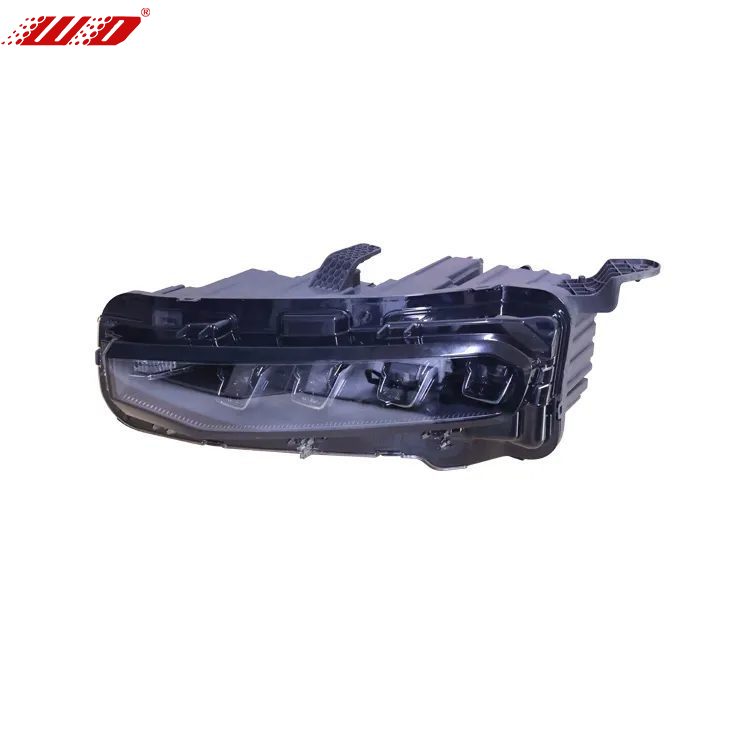 Zeekr 001 Left and Right OEM LED Headlamp AssemblyLeft and right OEM LED headlamp assemblies for Zeekr 001, with part numbers 8892470492 and 8892470494, sealed housings, and direct bolt-on fitment.View Product →
A Selection Sequence That Survives an Audit
When a ZEEKR, VOYAH or Leapmotor arrives, work through the following sequence before committing to a supplier. It takes fifteen minutes and prevents most of the disputes that follow a bad delivery.
- Decode the VIN and confirm the trim. A ZEEKR 001 from the 2021 model run and one from the 2024 run share a nameplate and almost nothing else. Lights, bumper covers and door trims are not interchangeable between them.
- Request the part number in writing, then cross-check it. If the number cannot be traced to a catalogue entry, treat the part as generic regardless of how it is described.
- Separate structural, safety and cosmetic items. Bumper reinforcements, airbag modules and headlamp assemblies should come from a verified source. Wheel arch liners and decorative strips tolerate far more latitude.
- Ask for the left or right and the configuration level explicitly. Many Chinese-brand parts are split by side and by high or low trim, and the wrong version will not connect to the existing harness or sensor set.
- Price the total installed cost, not the part. Include paint, blending, bracket replacement and a realistic rework allowance of one to two hours. That calculation almost always favours the verified part.
- Document the customer authorisation. Where a non-certified part is fitted to a late-model vehicle, a signed acknowledgement protects both the shop and the owner.
A concrete example: the Li Auto L7 front bumper below is a high-exposure part. Ordering it by the correct factory part number, with the matching lower grille and radiator support, removes the guesswork that turns a two-day job into a two-week one. The same logic applies to larger body assemblies such as the Li Auto L7 body system parts, where panel gaps cascade across the whole front end.
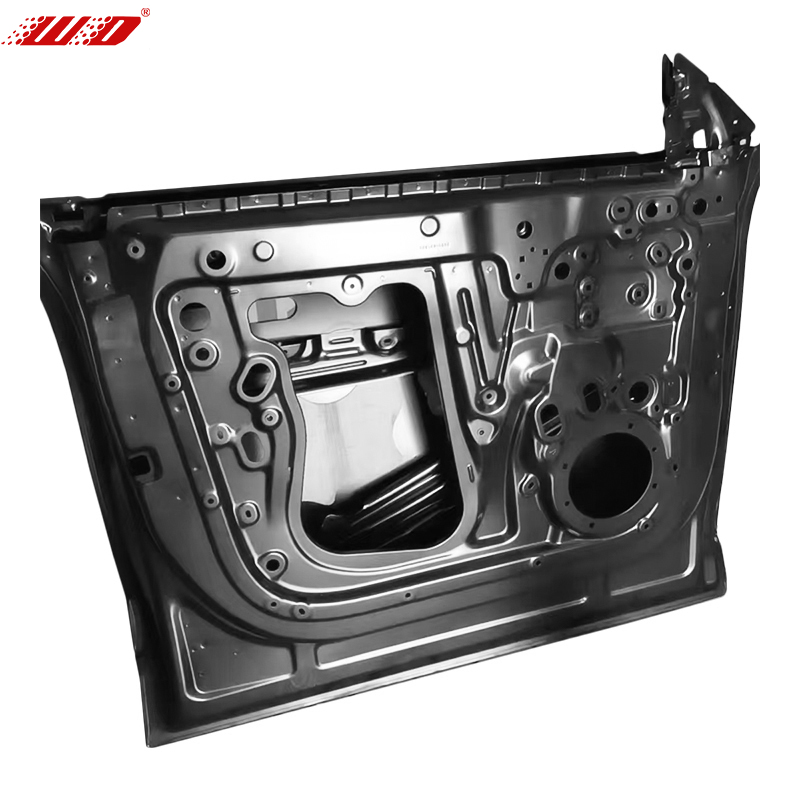 Genuine Leapmotor C11 Left Front Door Assembly 6211100-CA01DYGenuine OEM left front door assembly for 2021–2024 Leapmotor C11, listed at 1290 x 272 x 1111 mm and 22.4 kg with primer-black iron finish.View Product →
Compliance and Long-Term Maintenance Notes
Two obligations sit alongside the technical choice, and both are easy to underestimate until a claim goes wrong.
- Disclosure on the repair order. Many jurisdictions require that a customer be told when a non-original part is used on a vehicle still under a manufacturer warranty, and some policies require a specific consent line. Record it in writing before the panels go on.
- Brand and trademark boundaries. A supplier cannot legally describe a part as genuine if it does not come from the vehicle maker's channel. Look for wording such as "factory-equivalent" or "OEM-supplier part" and treat any claim of official origin without paperwork as a red flag.
- Traceability for fleet work. Fleet operators increasingly want a part number and a supplier name attached to every line on the invoice. Suppliers who can provide that documentation become the default choice regardless of a few points of price difference.
- Coatings and corrosion. On Chinese-brand EVs used in salted-road markets, the coating on reinforcement bars and brackets matters more than the coating on visible panels. Ask about corrosion testing on hidden structural parts, not just on the painted cover.
Treat these as operational habits rather than paperwork. Shops that build a part-number library for each Chinese brand they service, with year, trim and side recorded per line, resolve 90 percent of fitment arguments before the part is ordered.
What This Means in Practice
The CAPA versus OEM question was written for a market where certified aftermarket crash parts compete with dealer-supplied originals on high-volume American and Japanese models. That market still exists, and CAPA certification remains a meaningful signal there. It simply does not extend to Li Auto, ZEEKR, VOYAH, Leapmotor or Geely.
So drop the framing. For Chinese-brand EVs, the useful question is narrower and more answerable: does this supplier carry the correct part number for this exact year and trim, on the correct side, from a production line that matches the assembly part? Get a clear answer to that, price the total installed cost instead of the sticker, and the sourcing decision becomes straightforward. The premium for a verified part is real, but it is almost always smaller than the cost of the comeback it prevents.