 English
 русский
 Español
Content
- 1 Three Modes, One Car: How EV Drive Settings Actually Work
- 2 Eco Mode: Range Extension With a Throttle Trade-Off
- 3 Normal Mode: The Default That Most Drivers Never Leave
- 4 Sport Mode: Full Performance — and What It Costs
- 5 Matching Mode to Conditions: A Practical Guide
- 6 Drive Mode and Component Longevity: What Owners Should Know
Three Modes, One Car: How EV Drive Settings Actually Work
Most modern electric vehicles offer at least three driving modes: Eco, Normal, and Sport. The names suggest energy saving, balance, and performance — but the mechanical reality behind each mode is more specific than the label implies. Each mode adjusts the same set of variables: throttle response mapping, maximum motor output, regenerative braking strength, and in some vehicles, suspension stiffness. What changes is which of those variables gets prioritized.
For new energy vehicle drivers who care about handling feel and technology, knowing exactly what each mode does — and when to use it — makes the difference between a car that feels right and one that constantly fights your intentions.
Eco Mode: Range Extension With a Throttle Trade-Off
Eco mode reduces peak motor output and softens throttle sensitivity. Press the accelerator to the same depth as in Normal, and the car responds more slowly. That's intentional — the mode is designed to discourage aggressive acceleration, which is the single largest drain on battery range in urban driving. Regenerative braking is typically set higher in Eco, recovering more energy when the driver lifts off the accelerator.
The range benefit is real but modest. Studies comparing EV driving behavior have found that aggressive versus gentle throttle inputs account for a larger share of energy use than mode selection alone — meaning Eco mode nudges the driver toward efficiency rather than forcing it. For city commuting with frequent stops, Eco mode can extend usable range by 5–10%, primarily through increased regeneration rather than reduced motor efficiency.
From a component wear perspective, Eco mode's gentler acceleration reduces thermal stress on the motor windings and lowers peak current draw through the battery management system. Over high mileage, this can translate to marginally slower degradation of battery cells — a relevant consideration for owners planning to keep their vehicle long-term.
Normal Mode: The Default That Most Drivers Never Leave
Normal mode is precisely what the name suggests: the manufacturer's intended baseline. Throttle response is linear and predictable, regenerative braking is set at a moderate level, and motor output is available in full without the artificial ceiling of Eco. Most electric vehicles ship with Normal as the default, and surveys of EV drivers consistently show it as the mode used most often.
The handling character in Normal mode reflects the engineering team's design intent. Suspension calibration (where electronically adjustable), steering weight, and power delivery are all set to the values the development team considered optimal for everyday roads. For vehicles like the Zeekr 001 that offer adaptive suspension, Normal mode positions the dampers at a mid-point between comfort and sport settings — firm enough to respond accurately to steering inputs, compliant enough to absorb road surface irregularities.
Normal mode also places the least unexpected demand on chassis components. Throttle inputs are predictable, which means driveshaft joints, suspension bushings, and brake pads all operate within their expected load ranges. Owners who primarily drive in Normal mode and switch to Sport only occasionally will typically see component wear rates that align with the manufacturer's recommended service intervals.
Sport Mode: Full Performance — and What It Costs
Sport mode removes the power governor and sharpens throttle sensitivity so that small accelerator movements produce larger motor responses. In AWD electric vehicles, Sport mode often activates torque vectoring — distributing power between axles more aggressively to improve cornering stability and exit acceleration. Suspension systems firm up, steering weight increases, and regenerative braking may reduce to allow the car to coast more freely at speed.
The energy cost is straightforward: Sport mode uses more power per kilometer because the motor is being driven harder and the aerodynamic drag penalty from higher average speeds compounds the effect. For drivers focused on driving feel rather than range maximization, this is an acceptable trade-off on shorter routes.
Sport mode does place additional stress on specific components. Driveshaft assemblies, front and rear suspension control arms, and brake discs experience higher cyclic loads when the car is regularly driven in Sport mode with aggressive corner entry and exit. On vehicles with air suspension — including certain Zeekr 001 configurations — Sport mode holds the body at a lower ride height, which reduces the suspension travel available to absorb road impacts. Owners who use Sport mode frequently on rough urban roads should factor in slightly shorter intervals for checking suspension bushings and shock absorber condition. Relevant replacement parts, including the Zeekr 001 front suspension assembly and shock absorbers, are available as original OEM components.
Matching Mode to Conditions: A Practical Guide
| Driving Scenario | Recommended Mode | Key Reason |
|---|---|---|
| Urban stop-start commuting | Eco | Maximises regeneration, extends range in traffic |
| Mixed city and highway | Normal | Balanced response, no unnecessary battery draw |
| Motorway cruising | Normal | Consistent power delivery at stable speeds |
| Performance driving / spirited roads | Sport | Maximum torque response and suspension firmness |
| Low-charge, long-distance leg | Eco | Reduces consumption to extend range to next charger |
The most common mistake EV drivers make with drive modes is leaving Sport engaged permanently because the throttle feel is more satisfying. The range penalty accumulates over time, and the additional load on chassis components becomes relevant at higher mileages. A practical approach is to use Normal as the daily default and switch to Sport selectively — when merging onto a motorway, navigating a winding road, or simply when the drive warrants it.
Drive Mode and Component Longevity: What Owners Should Know
No driving mode damages a well-maintained car. But mode selection does influence the rate at which certain components approach their service limits. The table above captures the practical guidance, but the underlying principle is simpler: higher motor output and sharper chassis loading accelerate wear on the parts that absorb those forces — suspension components, driveshafts, brake pads, and tires.
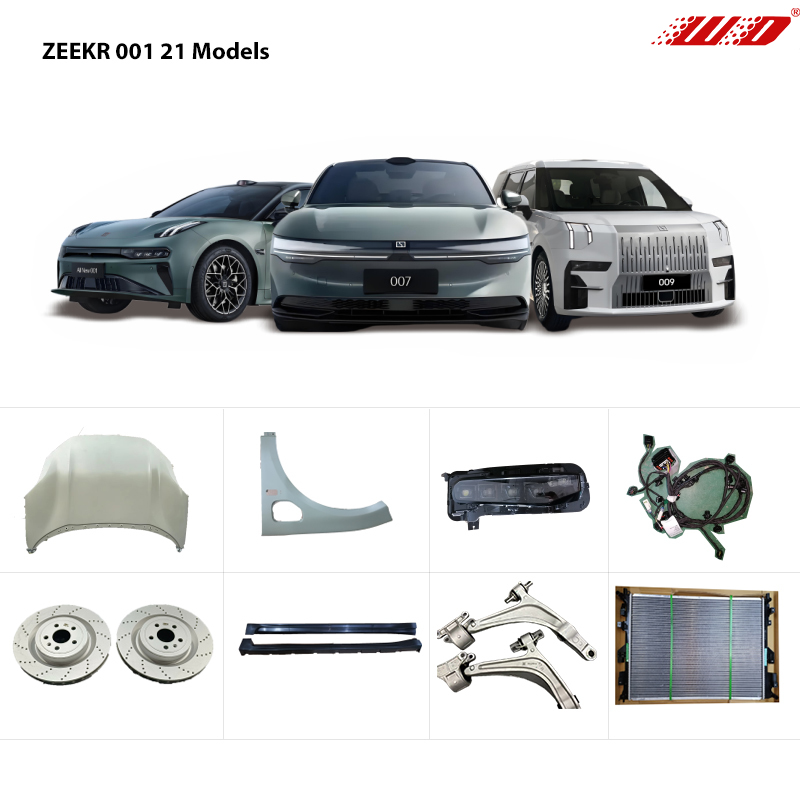
For owners of Chinese new energy vehicles including models from the Zeekr, Li Auto, and Leapmotor ranges, sourcing OEM-grade replacements for wear items is straightforward. The Zeekr original parts catalogue, the Li Auto genuine parts range, and the Leapmotor OEM components catalogue all list chassis and electrical parts by model and system, making it straightforward to identify the correct replacement before mileage-driven wear becomes a safety concern.