 English
 русский
 Español
As ZEEKR expands its footprint across Europe, the Middle East, Australia, and Southeast Asia, the demand for reliable ZEEKR auto parts is growing just as fast as the vehicles themselves. For workshop owners, fleet operators, and parts distributors operating in markets where ZEEKR is establishing its presence, securing a consistent, traceable supply of OEM-quality components is no longer optional—it is a fundamental requirement for after-sales service continuity. This guide covers the full landscape of ZEEKR auto spare parts: what categories matter most, how OEM and aftermarket grades compare, and what to look for when evaluating a supplier capable of supporting your operation at scale.
Content
Why ZEEKR Parts Sourcing Requires a Specialist Approach
ZEEKR is not a conventional automotive brand. Launched by Geely Auto Group in 2021 and built on the Sustainable Experience Architecture (SEA) platform, ZEEKR vehicles integrate advanced EV-specific engineering—800V charging architecture, regenerative braking systems, full-width LED light assemblies, and multi-layer ADAS sensor housings—that differs substantially from traditional combustion-engine vehicles. This means that ZEEKR auto parts are not generic commodity items. Bumpers house radar and camera sensors. Brake systems are calibrated for regenerative energy recovery. Headlight and taillight assemblies carry complex LED drivers and sequential illumination logic. Each component must be sourced to exact specifications to ensure fit, function, and compatibility with the vehicle's electronic control systems.
The ZEEKR model range currently includes four primary vehicles—the 001 shooting brake, the 009 luxury MPV, the 7X SUV, and the 9X flagship SUV—each with distinct body geometries, trim levels, and regional specification variants. A front bumper for the 7X is not interchangeable with the 009's front fascia, and a standard-trim headlight for the 001 differs from the high-trim variant in both optics and connector pinout. For distributors and workshop technicians, this model-specific complexity means parts procurement cannot be handled through generalist channels. Specialist suppliers with structured catalogues, model-specific inventory, and verified fitment data are the only reliable source.
Complete Category Overview of ZEEKR Auto Spare Parts
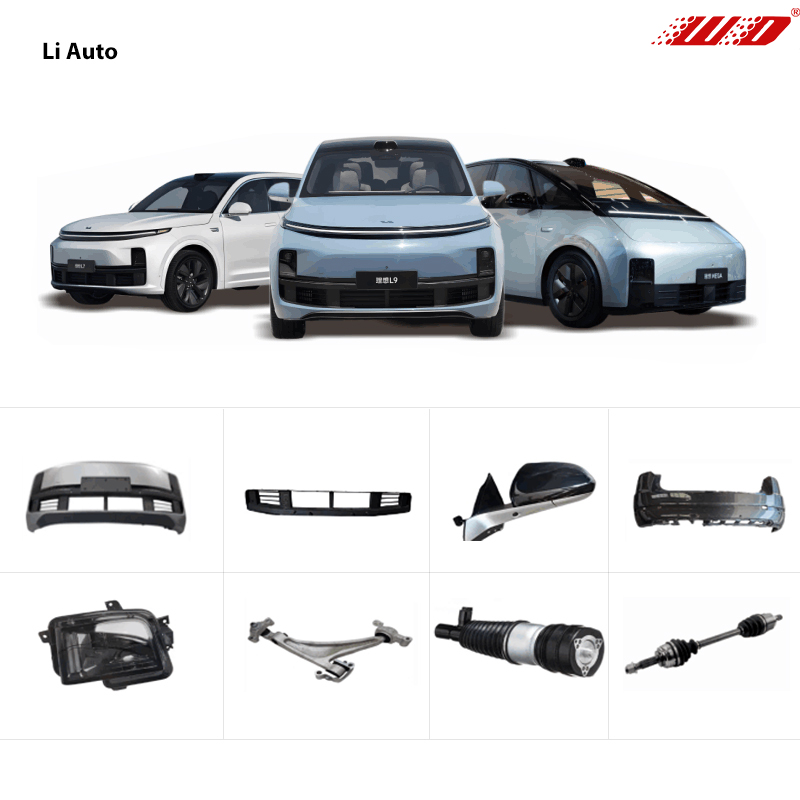
Understanding the full breadth of available ZEEKR auto spare parts helps procurement teams build accurate repair cost models and avoid sourcing gaps. The following categories represent the highest-demand segments across ZEEKR's active model range.
Exterior Body Components
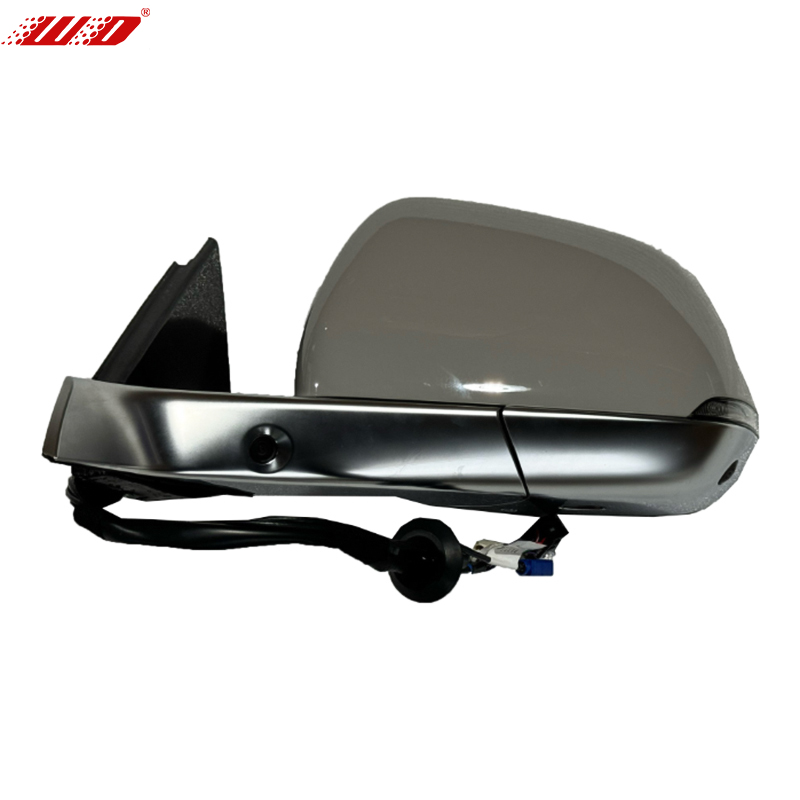
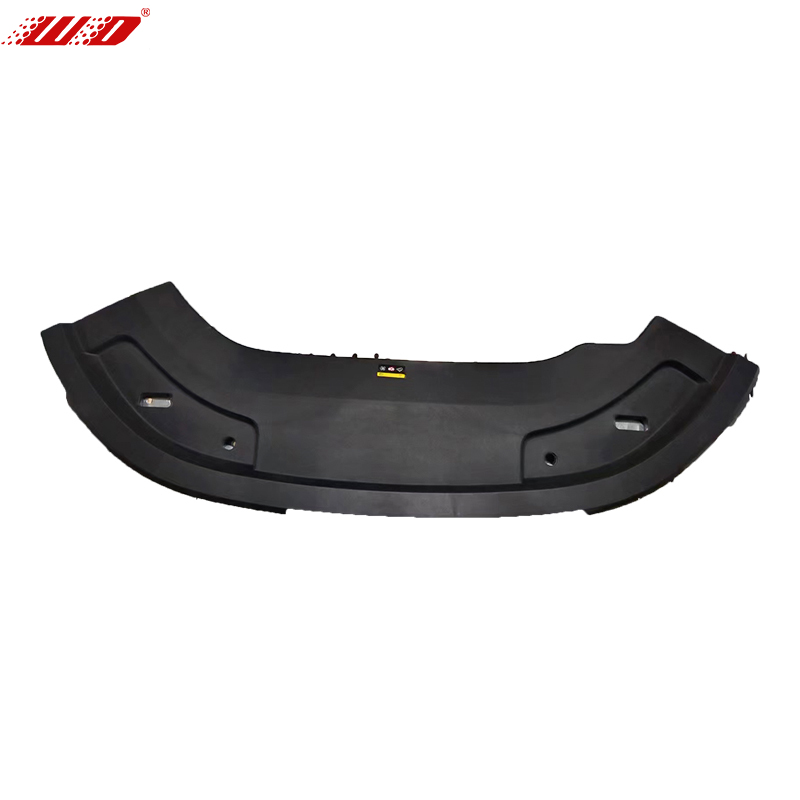
Body panels and exterior assemblies are the most frequently sourced category for collision repair and cosmetic restoration. For ZEEKR vehicles, these parts carry additional engineering complexity due to integrated sensor mounts, aerodynamic channel geometries, and multi-material construction that combines injection-moulded PP+ABS composites with aluminum reinforcement inserts and energy-absorbing foam cores. Key body components include front and rear bumper assemblies, front grilles, fenders, door panels, hoods, and tailgate assemblies. Bumper brackets—front and rear, left and right—are high-turnover items often overlooked in initial procurement planning but consistently required in collision repair scenarios.
Lighting Assemblies
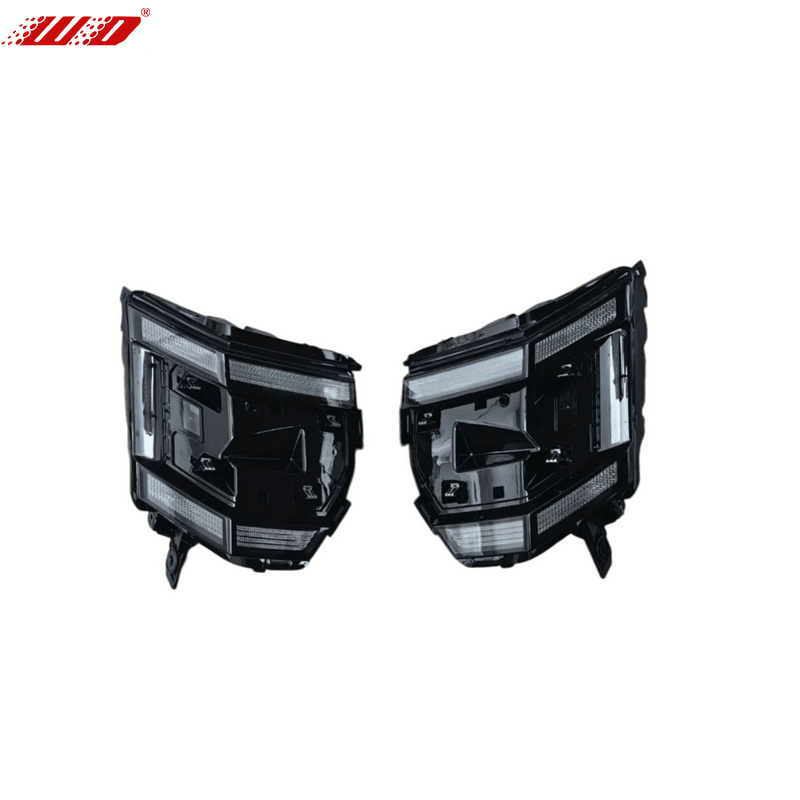
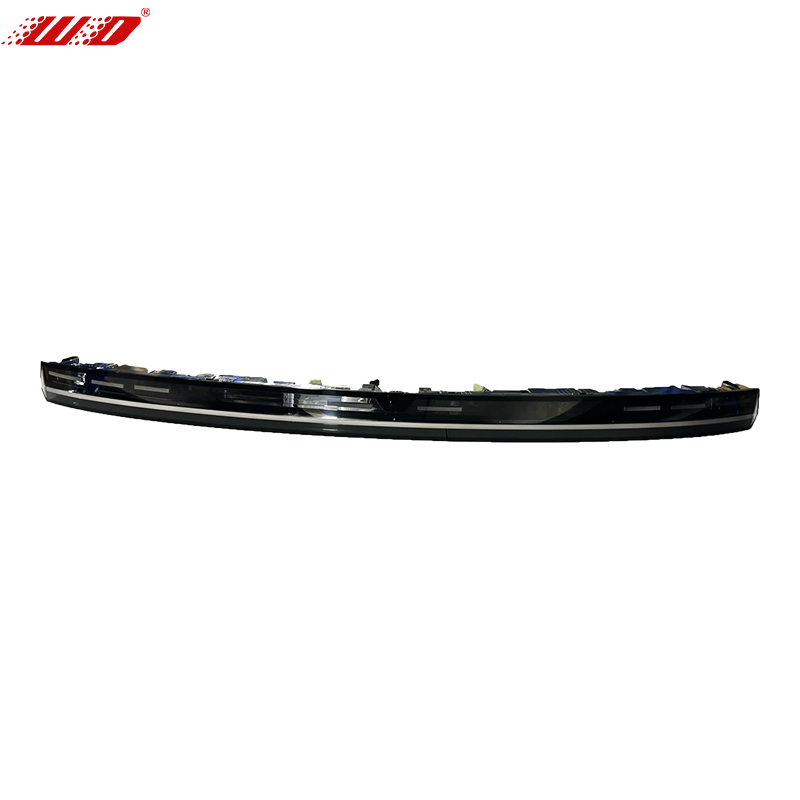
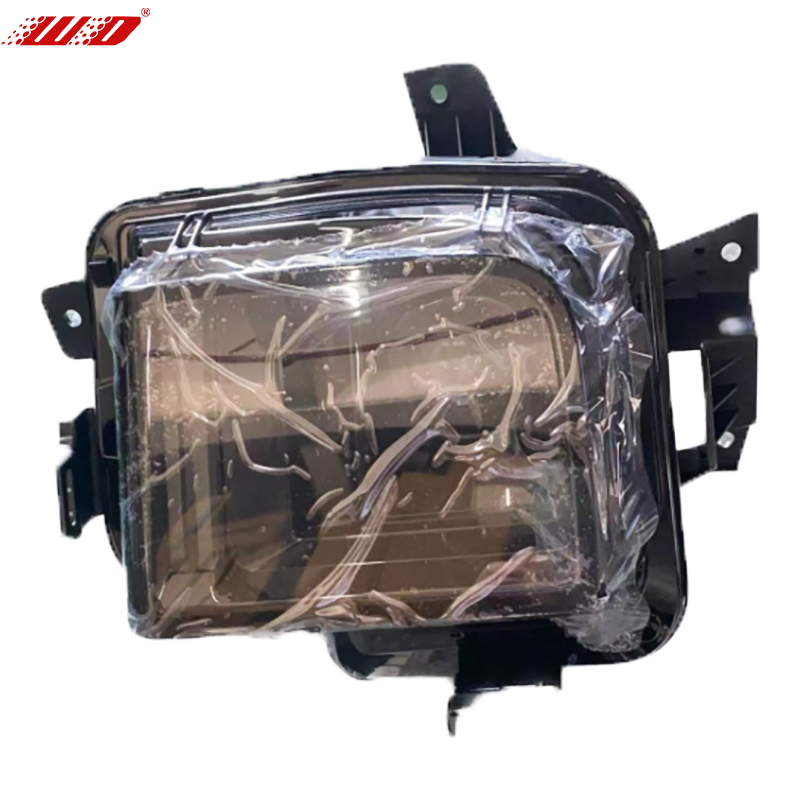
ZEEKR's signature lighting design—full-width LED bars, adaptive matrix headlights, and sequential indicator systems—requires complete assembly replacement rather than bulb-level servicing. Headlight assemblies for the 7X and 9X include integrated DRL modules, adaptive beam units, and multi-connector harness interfaces. Tail-light assemblies incorporate polycarbonate outer lenses, aluminum heat-sink bases, and waterproof LED modules that must meet the original illumination and safety standards. Fog lights, side markers, and interior ambient lighting strips round out the lighting category.
Brake System Components
ZEEKR's braking systems are engineered for the specific demands of electric vehicle operation—frequent regenerative braking cycles, higher unsprung weight from battery packs, and the need to blend hydraulic and electronic braking seamlessly. Brake pads for ZEEKR models use advanced ceramic-metallic composite formulations that deliver consistent friction, low dust output, and compatibility with regenerative braking control systems. Brake discs are precision-machined from high-carbon alloys to maintain thermal stability and rotational balance across extended service cycles. Aluminum brake calipers—available in both standard and performance-painted finishes for sport editions—complete the system.
Structural and Suspension Components
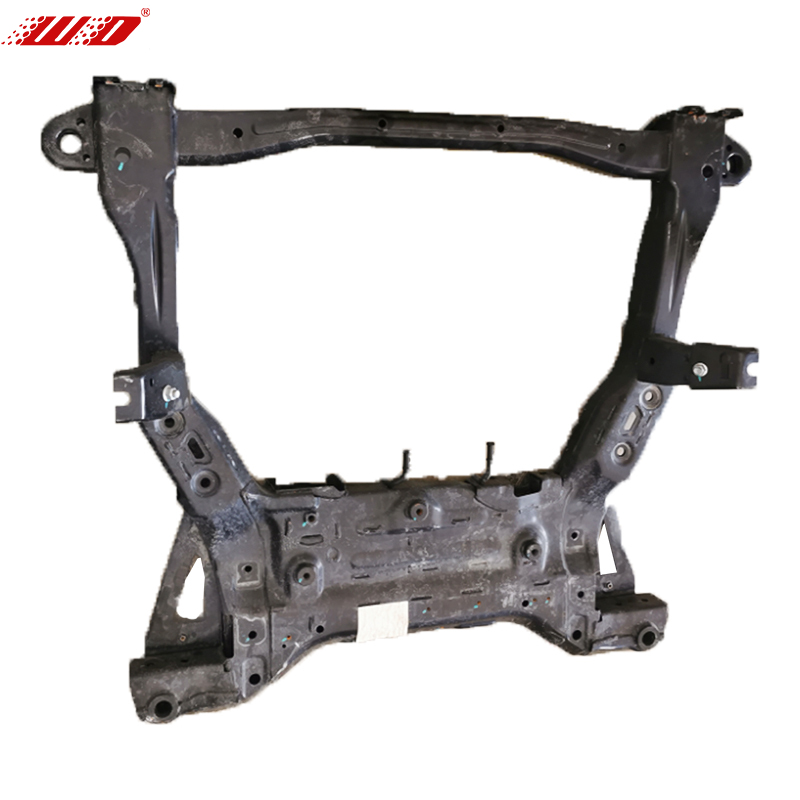
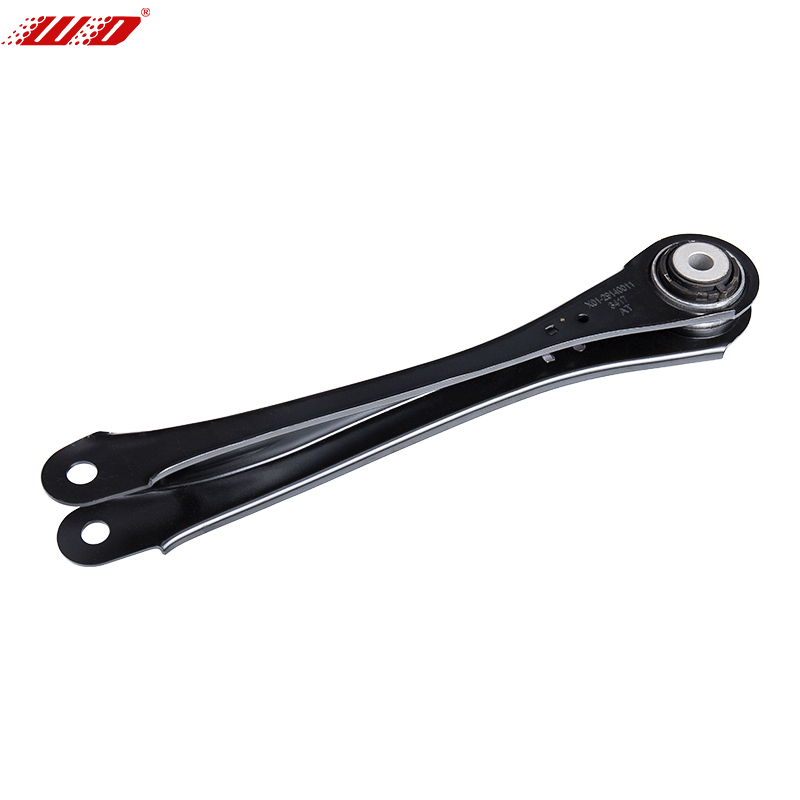
Shock absorbers, control arms, subframe components, and wheel hub assemblies are essential for maintaining ZEEKR's precision ride and handling characteristics. The 9X's air suspension system, in particular, requires model-specific air spring assemblies and valve block components that are not interchangeable with conventional coilover hardware. Structural repair components including A-pillars, B-pillars, sill reinforcements, and floor cross-members are also stocked by specialist suppliers for vehicles that have sustained structural damage.
Filters, Wipers, and Service Items
Routine service items including cabin air filters, HEPA filtration units, wiper blade assemblies, brake fluid, and coolant are consumable categories with the highest repeat order frequency. For workshops servicing ZEEKR fleets, maintaining buffer stock of these items eliminates the lead time delays that generate customer dissatisfaction during scheduled maintenance intervals.
OEM, Genuine, and Aftermarket: Understanding the Grade Differences
The terminology around ZEEKR auto parts grades is frequently misunderstood, and the confusion leads to either overpaying for unnecessarily premium components or inadvertently sourcing substandard parts that fail prematurely. The three grades are distinct in origin, specification compliance, and appropriate application.
| Grade | Origin | Specification Compliance | Best Application |
| Genuine OEM | ZEEKR-authorized production line | Identical to factory-installed part | Warranty repairs, insurance claims, fleet compliance |
| OEM-Quality Aftermarket | Tier 1 supplier, same factory tooling | Meets or matches OEM spec | Independent workshops, cost-sensitive fleet repairs |
| Standard Aftermarket | Independent manufacturer | Variable; requires supplier verification | Non-critical consumables where fit is confirmed |
For safety-critical systems—brakes, suspension, and lighting—OEM or OEM-quality aftermarket parts are the only responsible specification. For consumable items such as cabin filters and wiper blades, verified aftermarket alternatives offer acceptable performance at reduced cost. The key is supplier transparency: a credible ZEEKR auto parts supplier will clearly state the grade, origin, and applicable vehicle fitment for every part number in their catalogue.
What to Demand from a ZEEKR Auto Parts Supplier
The global market for Chinese EV parts is crowded with suppliers at vastly different quality and reliability levels. For distributors and workshop operators building a long-term supply relationship, the following criteria separate professional ZEEKR auto spare parts suppliers from opportunistic intermediaries.
- OEM partnership credentials: Suppliers that have established strategic partnerships directly with OEMs and serve as authorized agent distributors of original aftermarket parts operate within the manufacturer's quality system. This means parts are produced on validated tooling, tested against factory specifications, and traceable to the original production authorization—a critical distinction for insurance-grade repair documentation.
- Warehousing scale and inventory depth: Lead time is one of the most damaging variables in after-sales service. Suppliers operating modern warehousing facilities of 50,000 square meters or more, with inventory SKU counts maintained above 100,000 year-round, can fulfill multi-line orders from stock without relying on back-order production cycles. For workshops operating in markets where ZEEKR vehicles are actively sold but locally stocked parts are scarce, this warehousing infrastructure is the difference between a two-day repair and a three-week vehicle downtime event.
- Model-specific catalogue structure: A supplier's catalogue should be organized by ZEEKR model (001, 009, 7X, 9X), trim level, and production year, with clear fitment notes for right-hand and left-hand drive variants. Suppliers that list ZEEKR parts without model-level specificity create fitment risk that falls back on the buyer.
- Export compliance and logistics capability: Reliable shipping to Europe, the Middle East, Australia, and Southeast Asia requires export documentation expertise, Harmonized System (HS) code accuracy, and established freight partnerships. Delays at customs caused by incorrect documentation are as damaging to workshop operations as a stockout.
- Quality control documentation: Request inspection reports, material certifications, and photographic QC records for each shipment. For structural and safety components, suppliers should be able to provide test data confirming material grade, dimensional accuracy, and surface finish compliance against OEM drawing tolerances.
Building a Reliable ZEEKR Parts Supply Chain for Your Market
For distributors entering markets where ZEEKR vehicle populations are growing—particularly in Western Europe, the Gulf states, and Oceania—establishing a structured ZEEKR auto spare parts supply chain before demand peaks is a significant competitive advantage. Workshop networks that can offer faster repair turnaround, verified OEM-grade components, and comprehensive model coverage retain customers more effectively than competitors sourcing parts on an ad-hoc basis.
The practical steps for building this supply chain are straightforward. Begin by mapping the ZEEKR model mix in your service area and identifying the top 50 highest-turnover part numbers by category—typically front and rear bumper assemblies, brake pad sets, headlight and taillight assemblies, cabin filters, and wiper blades. Source these from a Hangzhou-based or similarly positioned specialist supplier with verified OEM partnerships, confirmed warehouse depth, and active export experience to your region. Negotiate safety stock agreements that buffer against shipping variability, and establish a direct technical line to the supplier's product team for fitment queries that arise from model variants or production year changes.
ZEEKR's global expansion is accelerating. The after-sales infrastructure that supports it must scale at the same pace. Distributors and workshops that invest now in reliable ZEEKR auto parts sourcing relationships will be positioned to capture the service revenue that growing EV fleets generate consistently over their operational lifespans—a business case that improves with every additional ZEEKR vehicle registered in their market.